

/ Jul 01, 2026
/ Jul 01, 2026

World Bank to end lending to China by 2031 under new strategy

Published on

By

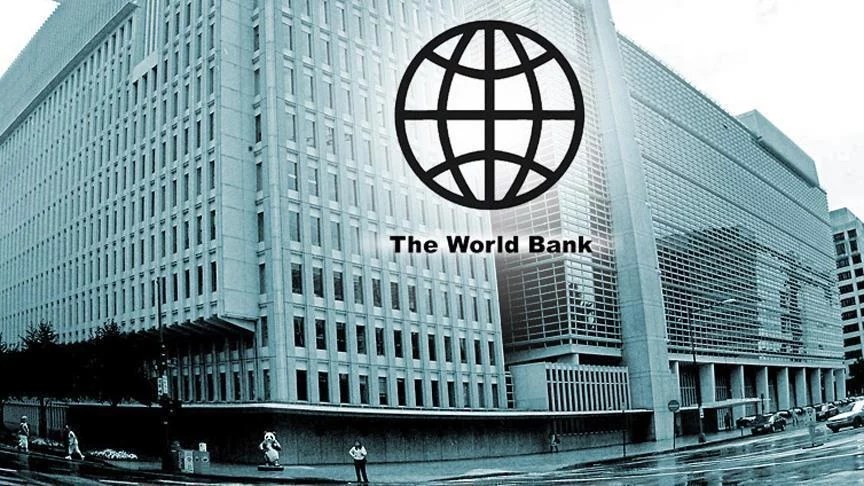
The World Bank will stop lending to China by 2031 under a new country partnership framework, marking a significant shift in its relationship with the world’s second-largest economy.


According to AFP, as reported by Channels Television, the new framework reflects China’s economic transformation after decades of rapid growth and declining poverty.

A World Bank official, speaking anonymously, said China has achieved substantial development gains with support from the institution and other international partners.

“Now we are reaching a new phase of our relationship, reflecting that reality,” the official said.

The World Bank said its role in China is evolving from that of a lender to a knowledge partner, providing technical expertise rather than financial support.

Lending to China has steadily declined in recent years. After peaking at $2.42 billion in 2017, World Bank financing fell to $750 million in 2025.

The decision comes after years of criticism from the United States over continued lending to China. During his first term, US President Donald Trump called on the World Bank to end all loans to Beijing, arguing that the country no longer required development financing. While he has maintained a tough stance on China during his second term, he has not renewed that specific demand.

Despite the planned end to lending, China remains a major contributor to global development through the World Bank. Under the latest replenishment of the International Development Association, which supports the world’s poorest countries, Beijing pledged $1.5 billion, making it the fund’s fifth-largest donor.

The World Bank recently announced a similar approach for Poland, saying it intends to reduce lending to zero by 2031 while continuing to provide technical assistance.


You May Like

Leave a Reply

Your email address will not be published. Required fields are marked *

Most Popular

Must Read

A vintage landline telephone symbolising Finland's decision to end fixed-line telephone services after nearly 150 years.

Finland ends landline era after nearly 150 years of telephone service

Finland has officially ended an era in telecommunications, switching off its final landline telephone network nearly 150 years after fixed-line services were first introduced.   According to TheCable, citing developments in Finland, telecom operator Elisa ended its landline service on Tuesday with a symbolic final call between the company’s chief executive officer, Topi Manner, and Jarkko Saarimäki, head of Finland’s communications and transport agency. During the call, the two reflected on the role landline telephones once played in everyday life. Manner recalled living in London as a teenager during the 1980s, when he would arrange a weekly call home so his family would be available to answer. The conversation ended with the Finnish farewell “kuulemiin”, meaning “speak later”. Finland’s landline network dates back to the 1880s and became a key part of the country’s communications infrastructure. By the 1960s, Finland ranked seventh in Europe for landline subscriptions, with household connections reaching their highest levels in the early 1990s. The rapid rise of mobile phones, however, led to a steady decline in landline use. Finland, the home of mobile phone pioneer Nokia, became one of the world’s earliest adopters of mobile technology, accelerating the shift to wireless communication. Most major telecom operators began phasing out landline services from 2019, while another provider stopped supporting fixed-line networks earlier this year. Elisa said it had not sold new landline subscriptions for several years because customers had increasingly embraced digital and mobile services. The company said private customers can retain their existing landline numbers by transferring them to mobile-based subscriptions. It also said it would work with business customers to provide suitable replacement communication solutions. The shutdown marks the end of one of the world’s longest-running national landline networks and reflects the continued global transition towards mobile and digital communications.
Read more

Editor's Pick

Trending News

Newsletter

Enter your email address and receive notifications of news by email.

You have been successfully Subscribed! Ops! Something went wrong, please try again.

© 2026 GongNews. All Rights Reserved.