/ Aug 18, 2026
/ Aug 18, 2026

Blog

  • All
  • Africa
  • Agriculture
  • Aviation
  • Banking
  • Business
  • Crime
  • Economy
  • Education
  • Entertainment
  • fashion
  • Health
  • Home
  • International
  • Judiciary
  • lifestyle
  • Metro
  • News
  • Nigeria
  • Politics
  • Religion
  • Security
  • Sport
  • sports
  • Tech
  • Technology
  • World News

Trending

Only 40% of Global Health Facilities meet basic sanitation standards

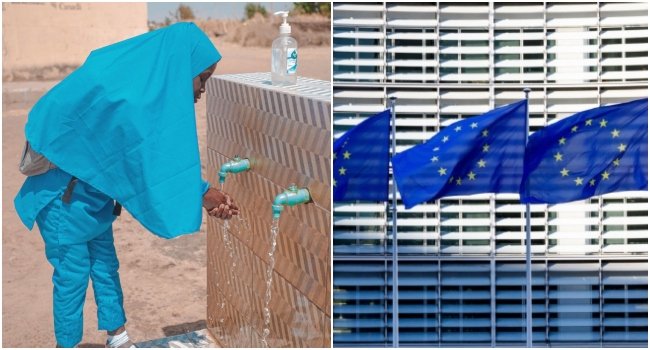
Only four in 10 healthcare facilities worldwide met basic sanitation standards in 2025, according to a new report by the World Health Organisation and UNICEF.   The report, which provides the first global estimates of sanitation services in healthcare settings, found that 11 per cent of facilities had no sanitation services at all, affecting an estimated 936 million people. Basic sanitation was defined as having usable toilets that meet the needs of patients and staff, including at least one toilet for staff, a sex-separated toilet with menstrual hygiene facilities and an accessible toilet for people with limited mobility. The findings showed significant regional disparities. Only 23 per cent of healthcare facilities in sub-Saharan Africa provided basic sanitation services, compared with 55 per cent in central and southern Asia. The report also assessed other essential services needed to maintain safe healthcare environments. An estimated 85 per cent of facilities had basic water services, while 72 per cent had basic hygiene services and 71 per cent met basic healthcare waste management standards. Environmental cleaning remained another major gap. Only 59 per cent of healthcare facilities met basic environmental cleaning standards, which require cleaning protocols and trained cleaning staff as part of infection prevention and control measures. The report found that 18 per cent of facilities, serving approximately 1.5 billion people, met neither of the environmental cleaning requirements. Data for this category came from 54 countries. Conditions were particularly poor in the world’s least-developed countries, where only 24 per cent of healthcare facilities met the environmental cleaning standard. The findings highlight persistent gaps in water, sanitation, hygiene, cleaning and waste management across healthcare facilities, particularly in poorer regions.
WAEC arrests over 20 examination officials for malpractice

WAEC under fire over 2026 results, schools question results, grading process

The West African Examinations Council is facing mounting scrutiny over its 2026 West African Senior School Certificate Examination results following complaints from school administrators and education stakeholders about alleged grading anomalies, technical difficulties and the rollout of computer-based testing.   The concerns emerged after some schools reported that high-performing students received lower grades in the 2026 WASSCE than expected based on their previous academic records and performance in other standardised examinations. Sam Abdulazeez, Director of Impact House Model Schools in Mowe, Ogun State, said his school recorded a sharp decline in students’ WASSCE performance despite retaining its teaching staff, improving facilities and intensifying examination preparations. He said all 45 candidates presented by the school for Mathematics in 2024 obtained A1. However, among 69 candidates in 2026, only about three or four secured A1 in Mathematics. Abdulazeez also said some students who scored highly in the Unified Tertiary Matriculation Examination did not achieve comparable grades in WASSCE. The school director linked some of the concerns to the introduction of serialisation and computer-based testing, saying the school experienced technical problems during a WAEC mock examination. He said the systems initially failed to connect to WAEC’s server, prompting the school to contact officials in Ogun and Lagos. The school was eventually allowed to conduct a paper-based examination. Abdulazeez also alleged that some grades in the school’s 2025 WASSCE results later changed on the result portal, saying the experience contributed to concerns surrounding the 2026 results. Another school administrator, who spoke anonymously, alleged that some students with strong UTME scores and previous academic records received D7, E8 and F9 grades in core WASSCE subjects. The administrator said two affected students who had secured admission to the University of Ibadan were recorded as failing Mathematics and English Language. Educationist Fola Adekeye called on examination bodies to ensure that their processes and results met required standards of integrity. He also urged WAEC to improve its facilities and clearly communicate changes to examination methods and curricula. Meanwhile, the Initiative for School Excellence and Education Foundation, through its solicitors, Zuriel Law Practice, has threatened legal action against WAEC over alleged irregularities in the conduct and processing of the 2026 Computer-Based WASSCE. The organisation asked WAEC to preserve electronic records, including candidate response databases, audit trails, server logs and scoring records. It also requested disclosure of the technical standards governing the 2026 CBE and proposed an independent audit of the examination platform. The organisation gave WAEC 14 days from receipt of its demand to confirm preservation of the records and establish review procedures. Its founder, Alex Onyia, also called for greater transparency around WAEC’s grading and standardisation processes, including disclosure of raw-score distributions and grade thresholds for major subjects. However, WAEC has defended the integrity of the 2026 WASSCE results. The council said the examination was conducted in accordance with its established standard operating procedures and relevant educational policies. WAEC’s Head of Public Affairs, Moyosola Adesina, said the results underwent rigorous quality-assurance processes. The examination body explained that candidates’ scripts passed through multiple levels of marking, moderation and auditing using standardised marking schemes supervised by subject experts. WAEC urged candidates, parents and schools with concerns about their results to contact the council directly through its offices and verified communication channels rather than relying on unverified claims on social media. The controversy comes amid wider scrutiny of Nigeria’s examination system following errors associated with the 2025 UTME, for which former JAMB Registrar Prof Ishaq Oloyede publicly apologised. The latest WAEC dispute has therefore renewed calls from education stakeholders for greater transparency in examination administration, result processing and the adoption of new testing technologies.

Kogi leads as 31 States spend N252bn on security in six months 

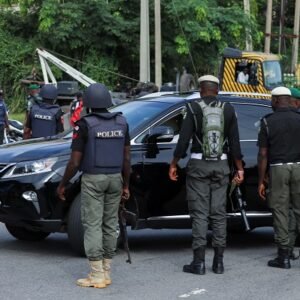
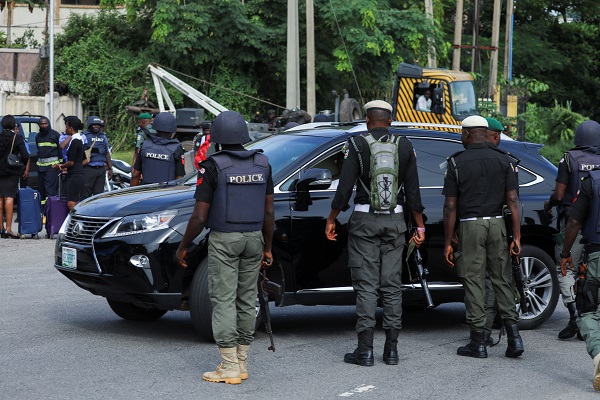
Thirty-one Nigerian states spent an estimated N252.26bn on security-related activities in the first six months of 2026, despite continued killings, kidnappings, banditry and other criminal activities across the country.   An analysis of state budget performance reports for the first and second quarters of 2026, obtained from Open Nigerian States, a BudgIT-backed budget data platform, showed that Kogi recorded the highest security expenditure at N34.67bn. Plateau followed with N23.69bn, while Bauchi spent N22.35bn. The three states accounted for about N80.70bn, or 32 per cent, of the total expenditure captured in the data. Other major spenders included Bayelsa with N17.49bn, Ekiti with N14.83bn, Anambra with N13.40bn, Sokoto with N11.27bn, Ondo with N10.54bn and Kaduna with N10.37bn. The expenditure covered security equipment, homeland security personnel, security votes and operations, ministries responsible for security and special advisers, as well as security trust funds. Overall spending rose substantially from the N75.84bn recorded in 2025 to N252.26bn in 2026. However, the comparison is not based on identical state coverage, as the latest dataset contains figures for more states. For the 22 states with comparable 2025 figures, expenditure increased from about N75.84bn to N144.44bn, representing a rise of approximately 90.5 per cent. Security equipment accounted for N37.08bn, while homeland security personnel expenditure reached N26.89bn. Security votes and related homeland security expenditure rose from N47.67bn to N135.61bn. Expenditure under ministries of security and special advisers also increased from N14.95bn to N42.15bn, while security trust fund spending climbed from N6.82bn to N10.53bn. The spending came amid persistent insecurity nationwide. The National Human Rights Commission’s first-quarter Human Rights Observatory documented 651 kidnapping incidents and 492 killings between January and March 2026. A separate SARI Global report obtained by The PUNCH recorded 792 deaths in 882 security incidents across the 36 states and the Federal Capital Territory in June alone. Official mid-year operational figures also showed that military and other security agencies conducted about 14,000 operations during the first half of 2026, killing 1,597 terrorists and insurgents and rescuing 1,516 kidnapped victims. Despite the increased spending, security experts and civil society groups have called for greater accountability and measurable outcomes. Former Assistant Inspector-General of Police, Wilson Inalegwu, advocated result-based security budgeting, saying governors should require Commissioners of Police to prepare annual policing plans tied to specific security challenges and measurable targets. He said spending should be linked to identified needs such as patrol vehicles, surveillance cameras, drones and other equipment, with security officials periodically assessed against agreed crime-reduction targets. The Executive Chairman of the Centre for Anti-Corruption and Open Leadership, Debo Adeniran, also called for accountability, questioning whether security funds were reaching personnel and agencies that needed them. Similarly, the Executive Director of the Civil Society Legislative Advocacy Centre, Auwal Musa Rafsanjani, called for detailed disclosure of security procurements and expenditure. The figures show a sharp expansion in state-level security financing, but the continued incidence of killings, kidnappings and other crimes has kept attention focused on whether increased spending is producing measurable improvements in public safety.
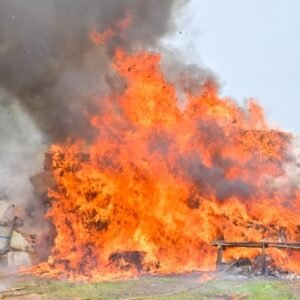
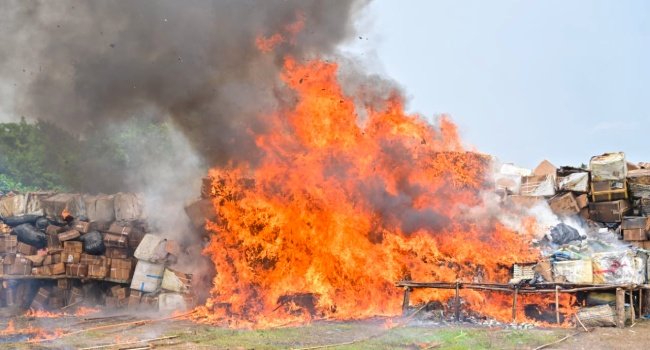
NDLEA officials destroy over 329,865 kilogrammes of illicit drugs worth ₦301 billion at Navy Town in Ojo, Lagos.

NDLEA destroys ₦301bn worth of cocaine, heroin and other drugs in Lagos

The National Drug Law Enforcement Agency (NDLEA) has destroyed more than 329,865 kilogrammes of illicit drugs valued at ₦301 billion in Lagos.   The drugs were incinerated on Monday, August 17, at Navy Town in the Ojo area of the state in a court-ordered exercise covering uncontested concluded cases and abandoned seizures. According to Channels Television, the destroyed substances included cocaine, heroin, methamphetamine, ephedrine, khat leaves and opioids such as tramadol and codeine syrup. Several varieties of cannabis, including Canadian Loud and skunk, were also destroyed. Seizures made across Lagos The NDLEA said the drugs were intercepted during operations carried out between April 2025 and May 2026. The agency’s Lagos Strategic Command accounted for 246,864.535kg, while specialised units operating across the state intercepted an additional 83,001.05kg. Those units included the Murtala Muhammed International Airport (MMIA), Tincan and Apapa Strategic Commands, the Marine Command and a Special Operations Unit. Speaking at the incineration site, NDLEA Chairman and Chief Executive Officer, Brig. Gen. Mohamed Buba Marwa (retd.), said the destruction demonstrated the agency’s determination to disrupt drug trafficking networks. He warned drug barons and financiers that law enforcement agencies would continue to pursue them regardless of where they operated. Marwa also said drug interceptions help protect communities from addiction and impaired driving while reducing potential healthcare costs and disrupting criminal networks. Drugs linked to violent crime Lagos State Governor Babajide Sanwo-Olu, represented by the Secretary to the State Government, Bimbola Salu-Hundeyin, described the destruction as a reminder of the scale of the threat posed by illicit drugs. The Comptroller General of Customs, Bashir Adewale Adeniyi, linked the illicit drug trade to the activities of violent non-state actors. He said the destruction deprived drug dealers of investments worth billions of naira and denied violent groups resources that could support their activities. The Chief of Naval Staff, Vice Admiral Idi Abbas, represented by the Flag Officer Commanding Western Naval Command, Rear Admiral Abdullahi Mustapha, also pledged continued military support for the NDLEA’s anti-drug operations.

Must Read

Only 40% of Global Health Facilities meet basic sanitation standards

Only four in 10 healthcare facilities worldwide met basic sanitation standards in 2025, according to a new report by the World Health Organisation and UNICEF.   The report, which provides the first global estimates of sanitation services in healthcare settings, found that 11 per cent of facilities had no sanitation services at all, affecting an estimated 936 million people. Basic sanitation was defined as having usable toilets that meet the needs of patients and staff, including at least one toilet for staff, a sex-separated toilet with menstrual hygiene facilities and an accessible toilet for people with limited mobility. The findings showed significant regional disparities. Only 23 per cent of healthcare facilities in sub-Saharan Africa provided basic sanitation services, compared with 55 per cent in central and southern Asia. The report also assessed other essential services needed to maintain safe healthcare environments. An estimated 85 per cent of facilities had basic water services, while 72 per cent had basic hygiene services and 71 per cent met basic healthcare waste management standards. Environmental cleaning remained another major gap. Only 59 per cent of healthcare facilities met basic environmental cleaning standards, which require cleaning protocols and trained cleaning staff as part of infection prevention and control measures. The report found that 18 per cent of facilities, serving approximately 1.5 billion people, met neither of the environmental cleaning requirements. Data for this category came from 54 countries. Conditions were particularly poor in the world’s least-developed countries, where only 24 per cent of healthcare facilities met the environmental cleaning standard. The findings highlight persistent gaps in water, sanitation, hygiene, cleaning and waste management across healthcare facilities, particularly in poorer regions.
Read more

Only 40% of Global Health Facilities meet basic sanitation standards

Only four in 10 healthcare facilities worldwide met basic sanitation standards in 2025, according to a new report by the World Health Organisation and UNICEF.   The report, which provides the first global estimates of sanitation services in healthcare settings, found that 11 per cent of facilities had no sanitation services at all, affecting an estimated 936 million people. Basic sanitation was defined as having usable toilets that meet the needs of patients and staff, including at least one toilet for staff, a sex-separated toilet with menstrual hygiene facilities and an accessible toilet for people with limited mobility. The findings showed significant regional disparities. Only 23 per cent of healthcare facilities in sub-Saharan Africa provided basic sanitation services, compared with 55 per cent in central and southern Asia. The report also assessed other essential services needed to maintain safe healthcare environments. An estimated 85 per cent of facilities had basic water services, while 72 per cent had basic hygiene services and 71 per cent met basic healthcare waste management standards. Environmental cleaning remained another major gap. Only 59 per cent of healthcare facilities met basic environmental cleaning standards, which require cleaning protocols and trained cleaning staff as part of infection prevention and control measures. The report found that 18 per cent of facilities, serving approximately 1.5 billion people, met neither of the environmental cleaning requirements. Data for this category came from 54 countries. Conditions were particularly poor in the world’s least-developed countries, where only 24 per cent of healthcare facilities met the environmental cleaning standard. The findings highlight persistent gaps in water, sanitation, hygiene, cleaning and waste management across healthcare facilities, particularly in poorer regions.
WAEC arrests over 20 examination officials for malpractice

WAEC under fire over 2026 results, schools question results, grading process

The West African Examinations Council is facing mounting scrutiny over its 2026 West African Senior School Certificate Examination results following complaints from school administrators and education stakeholders about alleged grading anomalies, technical difficulties and the rollout of computer-based testing.   The concerns emerged after some schools reported that high-performing students received lower grades in the 2026 WASSCE than expected based on their previous academic records and performance in other standardised examinations. Sam Abdulazeez, Director of Impact House Model Schools in Mowe, Ogun State, said his school recorded a sharp decline in students’ WASSCE performance despite retaining its teaching staff, improving facilities and intensifying examination preparations. He said all 45 candidates presented by the school for Mathematics in 2024 obtained A1. However, among 69 candidates in 2026, only about three or four secured A1 in Mathematics. Abdulazeez also said some students who scored highly in the Unified Tertiary Matriculation Examination did not achieve comparable grades in WASSCE. The school director linked some of the concerns to the introduction of serialisation and computer-based testing, saying the school experienced technical problems during a WAEC mock examination. He said the systems initially failed to connect to WAEC’s server, prompting the school to contact officials in Ogun and Lagos. The school was eventually allowed to conduct a paper-based examination. Abdulazeez also alleged that some grades in the school’s 2025 WASSCE results later changed on the result portal, saying the experience contributed to concerns surrounding the 2026 results. Another school administrator, who spoke anonymously, alleged that some students with strong UTME scores and previous academic records received D7, E8 and F9 grades in core WASSCE subjects. The administrator said two affected students who had secured admission to the University of Ibadan were recorded as failing Mathematics and English Language. Educationist Fola Adekeye called on examination bodies to ensure that their processes and results met required standards of integrity. He also urged WAEC to improve its facilities and clearly communicate changes to examination methods and curricula. Meanwhile, the Initiative for School Excellence and Education Foundation, through its solicitors, Zuriel Law Practice, has threatened legal action against WAEC over alleged irregularities in the conduct and processing of the 2026 Computer-Based WASSCE. The organisation asked WAEC to preserve electronic records, including candidate response databases, audit trails, server logs and scoring records. It also requested disclosure of the technical standards governing the 2026 CBE and proposed an independent audit of the examination platform. The organisation gave WAEC 14 days from receipt of its demand to confirm preservation of the records and establish review procedures. Its founder, Alex Onyia, also called for greater transparency around WAEC’s grading and standardisation processes, including disclosure of raw-score distributions and grade thresholds for major subjects. However, WAEC has defended the integrity of the 2026 WASSCE results. The council said the examination was conducted in accordance with its established standard operating procedures and relevant educational policies. WAEC’s Head of Public Affairs, Moyosola Adesina, said the results underwent rigorous quality-assurance processes. The examination body explained that candidates’ scripts passed through multiple levels of marking, moderation and auditing using standardised marking schemes supervised by subject experts. WAEC urged candidates, parents and schools with concerns about their results to contact the council directly through its offices and verified communication channels rather than relying on unverified claims on social media. The controversy comes amid wider scrutiny of Nigeria’s examination system following errors associated with the 2025 UTME, for which former JAMB Registrar Prof Ishaq Oloyede publicly apologised. The latest WAEC dispute has therefore renewed calls from education stakeholders for greater transparency in examination administration, result processing and the adoption of new testing technologies.

Editor's Pick

Trending News

Newsletter

Enter your email address and receive notifications of news by email.

You have been successfully Subscribed! Ops! Something went wrong, please try again.

© 2026 GongNews. All Rights Reserved.