/ Aug 18, 2026
/ Aug 18, 2026

Nigeria

  • All
  • Africa
  • Agriculture
  • Aviation
  • Banking
  • Business
  • Crime
  • Economy
  • Education
  • Entertainment
  • fashion
  • Health
  • Home
  • International
  • Judiciary
  • lifestyle
  • Metro
  • News
  • Nigeria
  • Politics
  • Religion
  • Security
  • Sport
  • sports
  • Tech
  • Technology
  • World News
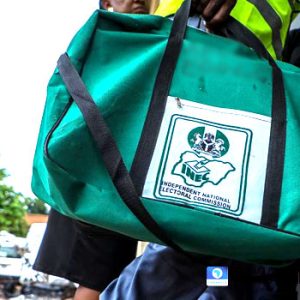
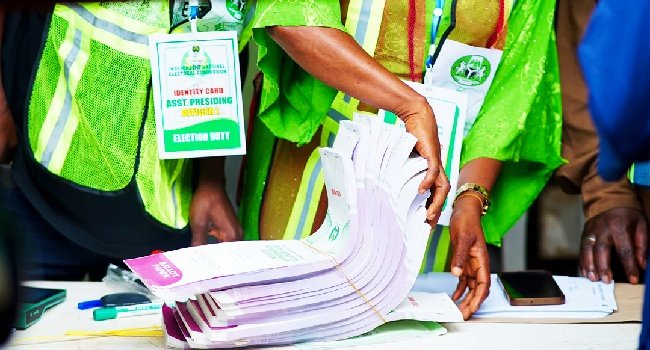
INEC officials and security personnel preparing election materials ahead of the Ekiti State governorship election.

June 27, 2025

The Independent National Electoral Commission (INEC) has scheduled 16 constituency bye-elections across 12 states for August 16. INEC Chairman, Prof. Mahmood Yakubu, announced this during a consultative meeting with political...
Trending

Kogi leads as 31 States spend N252bn on security in six months 

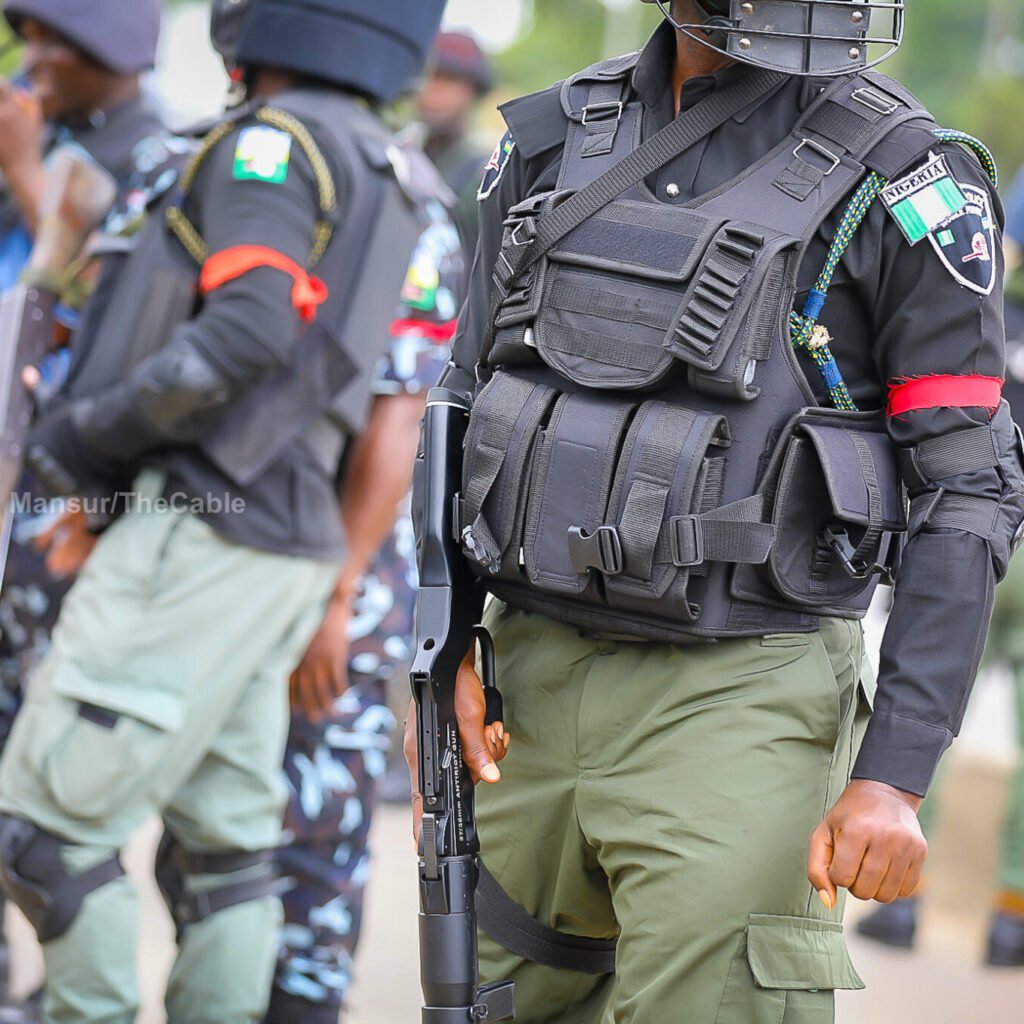
Thirty-one Nigerian states spent an estimated N252.26bn on security-related activities in the first six months of 2026, despite continued killings, kidnappings, banditry and other criminal activities across the country.   An analysis of state budget performance reports for the first and second quarters of 2026, obtained from Open Nigerian States, a BudgIT-backed budget data platform, showed that Kogi recorded the highest security expenditure at N34.67bn. Plateau followed with N23.69bn, while Bauchi spent N22.35bn. The three states accounted for about N80.70bn, or 32 per cent, of the total expenditure captured in the data. Other major spenders included Bayelsa with N17.49bn, Ekiti with N14.83bn, Anambra with N13.40bn, Sokoto with N11.27bn, Ondo with N10.54bn and Kaduna with N10.37bn. The expenditure covered security equipment, homeland security personnel, security votes and operations, ministries responsible for security and special advisers, as well as security trust funds. Overall spending rose substantially from the N75.84bn recorded in 2025 to N252.26bn in 2026. However, the comparison is not based on identical state coverage, as the latest dataset contains figures for more states. For the 22 states with comparable 2025 figures, expenditure increased from about N75.84bn to N144.44bn, representing a rise of approximately 90.5 per cent. Security equipment accounted for N37.08bn, while homeland security personnel expenditure reached N26.89bn. Security votes and related homeland security expenditure rose from N47.67bn to N135.61bn. Expenditure under ministries of security and special advisers also increased from N14.95bn to N42.15bn, while security trust fund spending climbed from N6.82bn to N10.53bn. The spending came amid persistent insecurity nationwide. The National Human Rights Commission’s first-quarter Human Rights Observatory documented 651 kidnapping incidents and 492 killings between January and March 2026. A separate SARI Global report obtained by The PUNCH recorded 792 deaths in 882 security incidents across the 36 states and the Federal Capital Territory in June alone. Official mid-year operational figures also showed that military and other security agencies conducted about 14,000 operations during the first half of 2026, killing 1,597 terrorists and insurgents and rescuing 1,516 kidnapped victims. Despite the increased spending, security experts and civil society groups have called for greater accountability and measurable outcomes. Former Assistant Inspector-General of Police, Wilson Inalegwu, advocated result-based security budgeting, saying governors should require Commissioners of Police to prepare annual policing plans tied to specific security challenges and measurable targets. He said spending should be linked to identified needs such as patrol vehicles, surveillance cameras, drones and other equipment, with security officials periodically assessed against agreed crime-reduction targets. The Executive Chairman of the Centre for Anti-Corruption and Open Leadership, Debo Adeniran, also called for accountability, questioning whether security funds were reaching personnel and agencies that needed them. Similarly, the Executive Director of the Civil Society Legislative Advocacy Centre, Auwal Musa Rafsanjani, called for detailed disclosure of security procurements and expenditure. The figures show a sharp expansion in state-level security financing, but the continued incidence of killings, kidnappings and other crimes has kept attention focused on whether increased spending is producing measurable improvements in public safety.
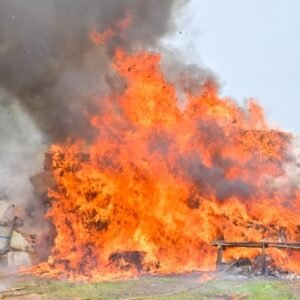
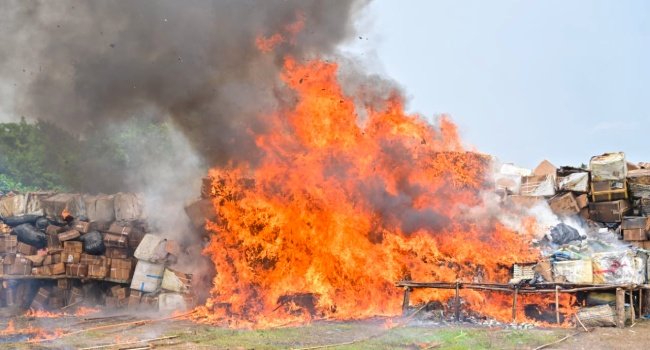
NDLEA officials destroy over 329,865 kilogrammes of illicit drugs worth ₦301 billion at Navy Town in Ojo, Lagos.

NDLEA destroys ₦301bn worth of cocaine, heroin and other drugs in Lagos

The National Drug Law Enforcement Agency (NDLEA) has destroyed more than 329,865 kilogrammes of illicit drugs valued at ₦301 billion in Lagos.   The drugs were incinerated on Monday, August 17, at Navy Town in the Ojo area of the state in a court-ordered exercise covering uncontested concluded cases and abandoned seizures. According to Channels Television, the destroyed substances included cocaine, heroin, methamphetamine, ephedrine, khat leaves and opioids such as tramadol and codeine syrup. Several varieties of cannabis, including Canadian Loud and skunk, were also destroyed. Seizures made across Lagos The NDLEA said the drugs were intercepted during operations carried out between April 2025 and May 2026. The agency’s Lagos Strategic Command accounted for 246,864.535kg, while specialised units operating across the state intercepted an additional 83,001.05kg. Those units included the Murtala Muhammed International Airport (MMIA), Tincan and Apapa Strategic Commands, the Marine Command and a Special Operations Unit. Speaking at the incineration site, NDLEA Chairman and Chief Executive Officer, Brig. Gen. Mohamed Buba Marwa (retd.), said the destruction demonstrated the agency’s determination to disrupt drug trafficking networks. He warned drug barons and financiers that law enforcement agencies would continue to pursue them regardless of where they operated. Marwa also said drug interceptions help protect communities from addiction and impaired driving while reducing potential healthcare costs and disrupting criminal networks. Drugs linked to violent crime Lagos State Governor Babajide Sanwo-Olu, represented by the Secretary to the State Government, Bimbola Salu-Hundeyin, described the destruction as a reminder of the scale of the threat posed by illicit drugs. The Comptroller General of Customs, Bashir Adewale Adeniyi, linked the illicit drug trade to the activities of violent non-state actors. He said the destruction deprived drug dealers of investments worth billions of naira and denied violent groups resources that could support their activities. The Chief of Naval Staff, Vice Admiral Idi Abbas, represented by the Flag Officer Commanding Western Naval Command, Rear Admiral Abdullahi Mustapha, also pledged continued military support for the NDLEA’s anti-drug operations.
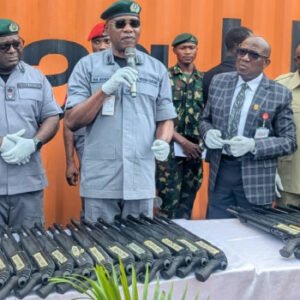
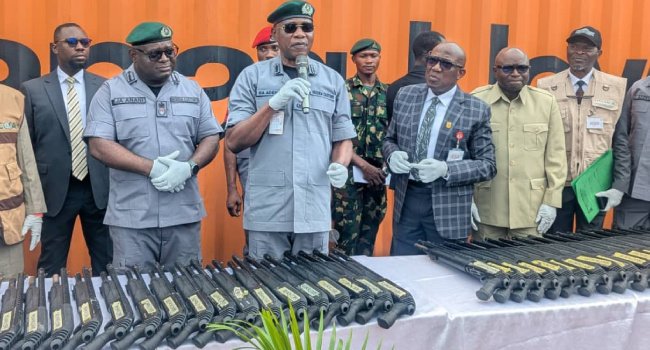
Nigeria Customs Comptroller-General Adewale Adeniyi during the handover of 399 seized rifles to the Office of the National Security Adviser.

Customs hands over 399 seized rifles to NSA amid election warning

The Nigeria Customs Service has handed over 399 seized rifles and assorted firearm components to the Office of the National Security Adviser, following the completion of an inventory and examination of the weapons intercepted at the Tincan Island Port Command.   Customs Comptroller-General Adewale Adeniyi said the seizure included 399 fully assembled Jojef firearms, as well as 89 frames, 16 heat shields, 10 trigger pins, three pistons, 25 locking lugs, 80 charging handles, 39 pistol-grip screws, 34 springs, 57 trigger groups, 66 foregrip latches, 45 foregrips or handguards, four pistol grips and five barrels. The weapons were handed over to the Director-General of the National Centre for the Control of Small Arms and Light Weapons under the Office of the NSA, Nuhu Ribadu. Adeniyi warned that criminal networks could attempt to exploit Nigeria’s borders, ports and airports to move prohibited items ahead of the country’s next general elections. > “We are about entering a major election cycle, and we know that by this period, men of the underworld will want to use our borders, our ports, our airports to bring in items like this,” Adeniyi said. He said Customs would intensify surveillance and enforcement operations to prevent the movement of illegal arms and other prohibited items. The Customs chief also reaffirmed the agency’s commitment to intelligence-led enforcement and stronger collaboration with security agencies to identify and dismantle arms-trafficking networks. Two suspects arrested during the preliminary investigation have also been handed over to the Office of the NSA for further action.
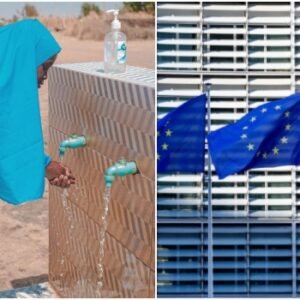
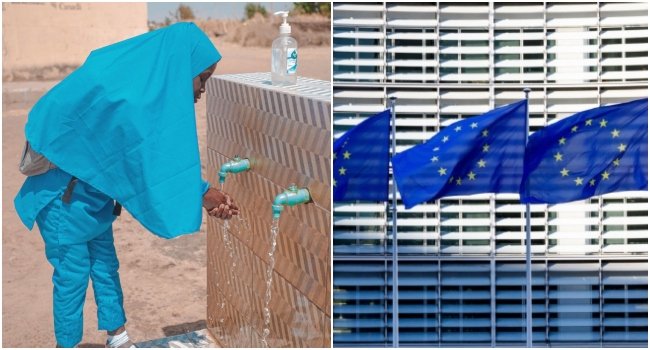
a patient during a cholera response as the European Union provides emergency funding to Nigeria and three African countries.

Nigeria gets €1.5m as EU releases €2.3m to tackle cholera outbreaks in Africa

The European Commission has allocated €2.3 million in emergency humanitarian funding to Nigeria, Cameroon, the Central African Republic and Chad to support efforts to contain ongoing cholera outbreaks.   The funding, announced on Monday, is aimed at strengthening outbreak response, improving access to safe water and sanitation, and supporting affected communities. According to the World Health Organization (WHO), more than 61,000 cholera cases were reported across the African Region in the first five months of 2026. Nigeria gets €1.5m Nigeria will receive the largest share of the funding, with €1.5 million earmarked for the country’s cholera response. The money will be used to increase the number of intervention teams, provide essential supplies including cholera kits, and strengthen water, sanitation and hygiene measures. The EU said the support will also cover the treatment of public water points and household water, while helping intensify epidemiological surveillance in hard-to-reach areas. It will further support case management, risk communication and community sensitisation. The development comes as several Nigerian states continue to respond to rising cholera cases. In Plateau State, authorities recently intensified containment measures after reporting 537 cases and 17 deaths. Other countries receive funding Cameroon will receive €100,000 to support outbreak containment and case management, including additional healthcare personnel, medicines, cholera treatment units and oral rehydration points in affected communities. The Central African Republic will receive €500,000 to scale up case management and vaccination, alongside water, sanitation and hygiene interventions. The funding will also strengthen surveillance, community engagement and safe burials. Chad will receive €200,000 to help break the chain of cholera transmission through improved access to water, sanitation and hygiene, as well as community support for surveillance and case management. The EU Commissioner for Preparedness and Crisis Management, Hadja Lahbib, said cholera remains a preventable and treatable disease but continues to threaten communities without access to safe water and healthcare. The funding, she said, would enable humanitarian partners to respond quickly, contain outbreaks and protect vulnerable communities. Cholera is caused by Vibrio cholerae bacteria and is commonly transmitted through contaminated food or water. Severe infections can cause rapid dehydration and shock.

Must Read

Kogi leads as 31 States spend N252bn on security in six months 

Thirty-one Nigerian states spent an estimated N252.26bn on security-related activities in the first six months of 2026, despite continued killings, kidnappings, banditry and other criminal activities across the country.   An analysis of state budget performance reports for the first and second quarters of 2026, obtained from Open Nigerian States, a BudgIT-backed budget data platform, showed that Kogi recorded the highest security expenditure at N34.67bn. Plateau followed with N23.69bn, while Bauchi spent N22.35bn. The three states accounted for about N80.70bn, or 32 per cent, of the total expenditure captured in the data. Other major spenders included Bayelsa with N17.49bn, Ekiti with N14.83bn, Anambra with N13.40bn, Sokoto with N11.27bn, Ondo with N10.54bn and Kaduna with N10.37bn. The expenditure covered security equipment, homeland security personnel, security votes and operations, ministries responsible for security and special advisers, as well as security trust funds. Overall spending rose substantially from the N75.84bn recorded in 2025 to N252.26bn in 2026. However, the comparison is not based on identical state coverage, as the latest dataset contains figures for more states. For the 22 states with comparable 2025 figures, expenditure increased from about N75.84bn to N144.44bn, representing a rise of approximately 90.5 per cent. Security equipment accounted for N37.08bn, while homeland security personnel expenditure reached N26.89bn. Security votes and related homeland security expenditure rose from N47.67bn to N135.61bn. Expenditure under ministries of security and special advisers also increased from N14.95bn to N42.15bn, while security trust fund spending climbed from N6.82bn to N10.53bn. The spending came amid persistent insecurity nationwide. The National Human Rights Commission’s first-quarter Human Rights Observatory documented 651 kidnapping incidents and 492 killings between January and March 2026. A separate SARI Global report obtained by The PUNCH recorded 792 deaths in 882 security incidents across the 36 states and the Federal Capital Territory in June alone. Official mid-year operational figures also showed that military and other security agencies conducted about 14,000 operations during the first half of 2026, killing 1,597 terrorists and insurgents and rescuing 1,516 kidnapped victims. Despite the increased spending, security experts and civil society groups have called for greater accountability and measurable outcomes. Former Assistant Inspector-General of Police, Wilson Inalegwu, advocated result-based security budgeting, saying governors should require Commissioners of Police to prepare annual policing plans tied to specific security challenges and measurable targets. He said spending should be linked to identified needs such as patrol vehicles, surveillance cameras, drones and other equipment, with security officials periodically assessed against agreed crime-reduction targets. The Executive Chairman of the Centre for Anti-Corruption and Open Leadership, Debo Adeniran, also called for accountability, questioning whether security funds were reaching personnel and agencies that needed them. Similarly, the Executive Director of the Civil Society Legislative Advocacy Centre, Auwal Musa Rafsanjani, called for detailed disclosure of security procurements and expenditure. The figures show a sharp expansion in state-level security financing, but the continued incidence of killings, kidnappings and other crimes has kept attention focused on whether increased spending is producing measurable improvements in public safety.
Read more

Kogi leads as 31 States spend N252bn on security in six months 

Thirty-one Nigerian states spent an estimated N252.26bn on security-related activities in the first six months of 2026, despite continued killings, kidnappings, banditry and other criminal activities across the country.   An analysis of state budget performance reports for the first and second quarters of 2026, obtained from Open Nigerian States, a BudgIT-backed budget data platform, showed that Kogi recorded the highest security expenditure at N34.67bn. Plateau followed with N23.69bn, while Bauchi spent N22.35bn. The three states accounted for about N80.70bn, or 32 per cent, of the total expenditure captured in the data. Other major spenders included Bayelsa with N17.49bn, Ekiti with N14.83bn, Anambra with N13.40bn, Sokoto with N11.27bn, Ondo with N10.54bn and Kaduna with N10.37bn. The expenditure covered security equipment, homeland security personnel, security votes and operations, ministries responsible for security and special advisers, as well as security trust funds. Overall spending rose substantially from the N75.84bn recorded in 2025 to N252.26bn in 2026. However, the comparison is not based on identical state coverage, as the latest dataset contains figures for more states. For the 22 states with comparable 2025 figures, expenditure increased from about N75.84bn to N144.44bn, representing a rise of approximately 90.5 per cent. Security equipment accounted for N37.08bn, while homeland security personnel expenditure reached N26.89bn. Security votes and related homeland security expenditure rose from N47.67bn to N135.61bn. Expenditure under ministries of security and special advisers also increased from N14.95bn to N42.15bn, while security trust fund spending climbed from N6.82bn to N10.53bn. The spending came amid persistent insecurity nationwide. The National Human Rights Commission’s first-quarter Human Rights Observatory documented 651 kidnapping incidents and 492 killings between January and March 2026. A separate SARI Global report obtained by The PUNCH recorded 792 deaths in 882 security incidents across the 36 states and the Federal Capital Territory in June alone. Official mid-year operational figures also showed that military and other security agencies conducted about 14,000 operations during the first half of 2026, killing 1,597 terrorists and insurgents and rescuing 1,516 kidnapped victims. Despite the increased spending, security experts and civil society groups have called for greater accountability and measurable outcomes. Former Assistant Inspector-General of Police, Wilson Inalegwu, advocated result-based security budgeting, saying governors should require Commissioners of Police to prepare annual policing plans tied to specific security challenges and measurable targets. He said spending should be linked to identified needs such as patrol vehicles, surveillance cameras, drones and other equipment, with security officials periodically assessed against agreed crime-reduction targets. The Executive Chairman of the Centre for Anti-Corruption and Open Leadership, Debo Adeniran, also called for accountability, questioning whether security funds were reaching personnel and agencies that needed them. Similarly, the Executive Director of the Civil Society Legislative Advocacy Centre, Auwal Musa Rafsanjani, called for detailed disclosure of security procurements and expenditure. The figures show a sharp expansion in state-level security financing, but the continued incidence of killings, kidnappings and other crimes has kept attention focused on whether increased spending is producing measurable improvements in public safety.
NDLEA officials destroy over 329,865 kilogrammes of illicit drugs worth ₦301 billion at Navy Town in Ojo, Lagos.

NDLEA destroys ₦301bn worth of cocaine, heroin and other drugs in Lagos

The National Drug Law Enforcement Agency (NDLEA) has destroyed more than 329,865 kilogrammes of illicit drugs valued at ₦301 billion in Lagos.   The drugs were incinerated on Monday, August 17, at Navy Town in the Ojo area of the state in a court-ordered exercise covering uncontested concluded cases and abandoned seizures. According to Channels Television, the destroyed substances included cocaine, heroin, methamphetamine, ephedrine, khat leaves and opioids such as tramadol and codeine syrup. Several varieties of cannabis, including Canadian Loud and skunk, were also destroyed. Seizures made across Lagos The NDLEA said the drugs were intercepted during operations carried out between April 2025 and May 2026. The agency’s Lagos Strategic Command accounted for 246,864.535kg, while specialised units operating across the state intercepted an additional 83,001.05kg. Those units included the Murtala Muhammed International Airport (MMIA), Tincan and Apapa Strategic Commands, the Marine Command and a Special Operations Unit. Speaking at the incineration site, NDLEA Chairman and Chief Executive Officer, Brig. Gen. Mohamed Buba Marwa (retd.), said the destruction demonstrated the agency’s determination to disrupt drug trafficking networks. He warned drug barons and financiers that law enforcement agencies would continue to pursue them regardless of where they operated. Marwa also said drug interceptions help protect communities from addiction and impaired driving while reducing potential healthcare costs and disrupting criminal networks. Drugs linked to violent crime Lagos State Governor Babajide Sanwo-Olu, represented by the Secretary to the State Government, Bimbola Salu-Hundeyin, described the destruction as a reminder of the scale of the threat posed by illicit drugs. The Comptroller General of Customs, Bashir Adewale Adeniyi, linked the illicit drug trade to the activities of violent non-state actors. He said the destruction deprived drug dealers of investments worth billions of naira and denied violent groups resources that could support their activities. The Chief of Naval Staff, Vice Admiral Idi Abbas, represented by the Flag Officer Commanding Western Naval Command, Rear Admiral Abdullahi Mustapha, also pledged continued military support for the NDLEA’s anti-drug operations.

Editor's Pick

Trending News

Newsletter

Enter your email address and receive notifications of news by email.

You have been successfully Subscribed! Ops! Something went wrong, please try again.

© 2026 GongNews. All Rights Reserved.