/ Oct 01, 2026
/ Oct 01, 2026

World News

  • All
  • Africa
  • Agriculture
  • Aviation
  • Banking
  • Business
  • Crime
  • Economy
  • Education
  • Entertainment
  • fashion
  • Health
  • Home
  • International
  • Judiciary
  • lifestyle
  • Metro
  • News
  • Nigeria
  • Opinions
  • Politics
  • Religion
  • Security
  • Sport
  • sports
  • Tech
  • Technology
  • World News
323334
Next

Trending

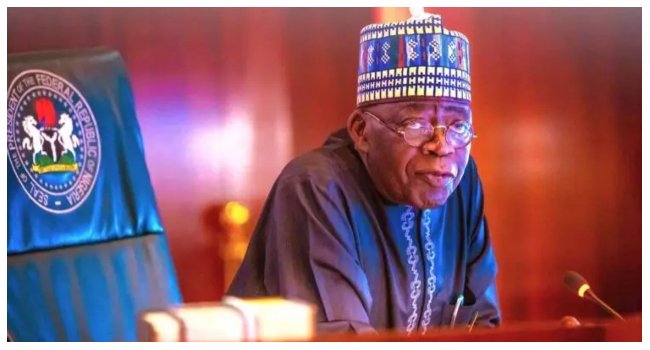
Tinubu directs delegation to Ethiopia to repatriate Nigerian prisoners held at Kaliti prison in Addis Ababa.

Tinubu rules out return to fuel subsidy, defends reforms

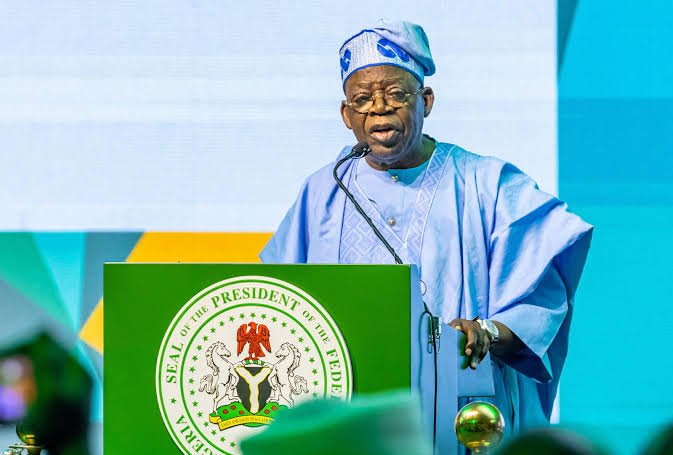
President Bola Tinubu has ruled out a return to Nigeria’s petrol subsidy regime, urging Nigerians to resist calls to reverse his administration’s economic reforms.   Tinubu made the declaration in his Independence Day address on Thursday, October 1, 2026, as Nigeria marked its 66th anniversary. The President defended the reforms introduced since he assumed office in 2023, saying they were designed to tackle longstanding weaknesses in the economy rather than merely ease their effects. “Our reforms did not create the weaknesses in our economy. They confronted them,” Tinubu said. ‘We must resist their siren song’ Tinubu acknowledged that the reforms had been difficult and that their “side effects were real”, but argued that abandoning them would amount to returning to policies that had failed to address the country’s underlying economic problems. He warned against calls from what he described as “certain influential but regressive voices” to abandon the reforms and return to subsidy arrangements. “Now, as certain influential but regressive voices would have us abandon the treatment and return ourselves to the abuse of addictive subsidies, we must resist their siren song,” he said. “We must remember why we began this journey and how far we have already come.” Using the analogy of a cancer patient undergoing painful but necessary treatment, Tinubu said previous governments had focused on easing economic symptoms while allowing underlying problems to worsen. “Nigeria was like a sick patient who receives the terrible news that he has cancer,” he said. “His doctor explains that the treatment will be difficult and painful, but that it offers a strong prospect of recovery. The patient has a choice. He can begin treatment, endure its discomfort and fight the disease. Or he can ask only for morphine, dull the pain and leave the cancer to spread.” “For too long, Nigeria’s leaders chose morphine while praying for a miracle that never came,” the President added. Tinubu cites economic gains Defending his administration’s record, Tinubu said Nigeria’s economic outlook had improved, citing economic growth of more than four per cent in 2026 and contributions from both the oil and non-oil sectors. He also said oil theft had declined, inflation had fallen substantially from its peak, foreign reserves had been rebuilt and the foreign exchange market had stabilised. According to the President, Nigeria recorded more than $6bn in non-oil export revenue in 2025, which he described as the highest in the country’s history. “These are not idle claims. International observers, journalists, NGOs and multilateral institutions can see the change,” Tinubu said. He added that the government was moving from economic correction towards greater emphasis on jobs, production and widespread prosperity.
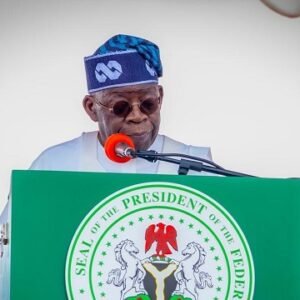
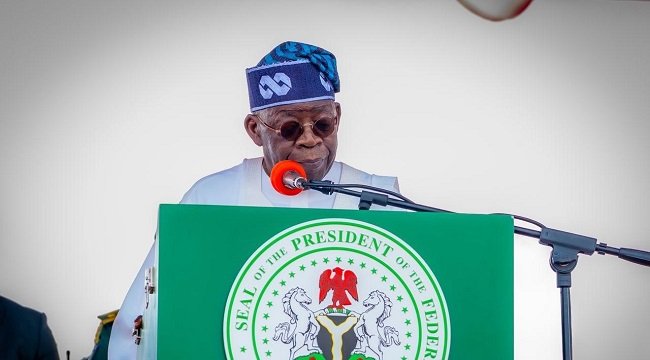
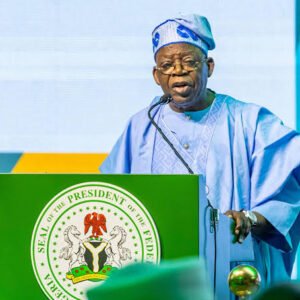
President Bola Ahmed Tinubu delivering the 2026 Democracy Day address, speaking on national reforms, security efforts, and democratic unity in Nigeria.

Nigeria @66: Tinubu declares reform era over, promises prosperity

President Bola Tinubu has declared that Nigeria’s most difficult phase of economic reforms is over, saying the country has moved from an “age of reform” into an “age of prosperity”.   Tinubu made the declaration on Thursday in his Independence Day address to mark Nigeria’s 66th anniversary, themed “From Reform to Prosperity.” The President defended his administration’s decision to remove petrol subsidies and reform the foreign exchange market, arguing that the measures were necessary to address long-standing economic weaknesses. He compared Nigeria’s economic situation before the reforms to a cancer patient who had to choose between painful treatment and temporary relief. “For too long, Nigeria’s leaders chose morphine while praying for a miracle that never came,” Tinubu said in the address. Tinubu warns against subsidy return The President also criticised calls for a return to petrol subsidies, urging Nigerians to reject what he described as a “siren song” to reverse the policy. “Now, as certain influential but regressive voices would have us abandon the treatment and return ourselves to the abuse of addictive subsidies, we must resist their siren song,” he said. Tinubu said his administration’s reforms did not create Nigeria’s economic weaknesses but confronted problems that had been left unresolved by previous governments. He said the reforms had helped produce stronger economic indicators, claiming that Nigeria’s economy had grown by more than four per cent in 2026, while inflation had fallen from its peak, foreign reserves had been rebuilt and the foreign exchange market had stabilised. He also said non-oil export revenue exceeded $6bn in 2025. PUNCH separately reported that the Federal Government cited real GDP growth of 4.2 per cent in the first half of 2026 as evidence of improving economic conditions. ‘Emergency treatment is over’ Tinubu said the government’s economic priorities had now shifted from stabilisation and reform to delivering broad-based prosperity. “The emergency treatment is over. The foundation has been repaired,” he said. According to the President, the next phase will focus on making prosperity visible in the daily lives of Nigerians through improved agricultural production, reliable electricity, easier access to credit, productive employment and more affordable food and transportation. He said the government would expand mechanised irrigation and dry-season farming, improve access to seeds and fertiliser, invest in storage and transport infrastructure, and strengthen links between farms, factories and markets. Tinubu promises jobs and industrial growth The President also placed jobs, enterprise and industrial expansion at the centre of the next phase of his administration. He said the government would use Nigeria’s gas resources to power industries, support the revival of factories, expand digital connectivity and invest in skills required by employers. “I want to see more Nigerians making things,” Tinubu said, adding that he wanted Nigerian businesses to produce for domestic consumption and export to international markets. The President also highlighted support programmes including the Nigerian Education Loan Fund and CREDICORP, saying they were intended to provide opportunities and financial support for Nigerians who could not wait for longer-term economic improvements. He said the government was also strengthening the National Social Register to improve support for vulnerable households. Cost of living remains a major issue Tinubu acknowledged that millions of Nigerians continue to struggle with food costs, school fees, healthcare expenses and transportation. He said the government’s approach would be to reduce the cost of producing and moving goods rather than relying solely on direct interventions. “When a farmer produces more cheaply, when fewer crops are lost between the farm and the market, when a manufacturer spends less on electricity, when a truck reaches its destination faster, and when the business environment fosters fair competition, all those savings will ultimately find their way into the price of goods in the market,” he said. However, economists, while acknowledging improvements in some macroeconomic indicators, said Nigeria still faced significant challenges involving poverty, unemployment, insecurity and weak productivity. Tinubu acknowledged that the government could not erase in four years problems that had accumulated over decades, but said his administration could change the country’s economic direction. “We will defeat” poverty, he said, while acknowledging that achieving the goal would require sustained economic growth and the creation of millions of productive opportunities. The President ended his Independence Day address by declaring that Nigeria had “corrected its course” and urged Nigerians to move forward without looking back. “The age of reform has done its work. Now begins the age of prosperity,” Tinubu said.

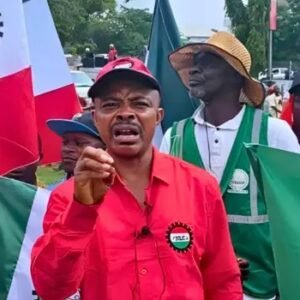
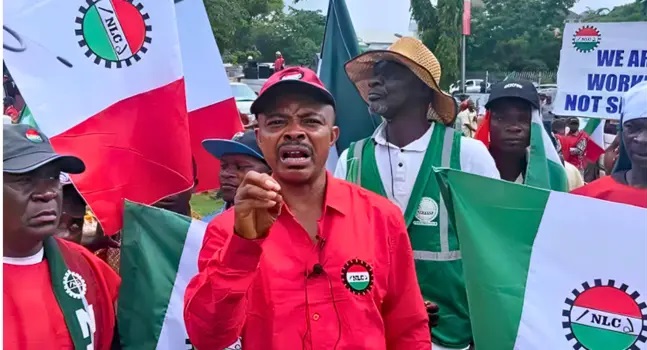
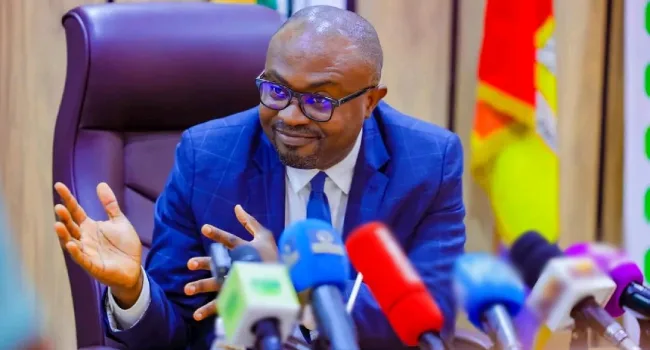
Nigeria Labour Congress (NLC) president Joe Ajaero speaking during a public event on workers’ welfare and economic hardship.

NLC demands petrol price cut, wage increase over survival crisis

The Nigeria Labour Congress (NLC) has demanded an immediate reduction in petrol prices, a nationwide wage award for workers and negotiations for a new national minimum wage, warning that Nigerians are facing a worsening survival crisis.   In an Independence Day statement signed by NLC President Joe Ajaero on Wednesday, September 30, 2026, the union said inflation had severely eroded the real value of workers’ wages, while rising petrol and transport costs had increased the cost of food, school fees, rent and other essential needs. The NLC said, “We stand at the crossroads of a full-scale survival crisis,” arguing that structural inflation had significantly reduced workers’ purchasing power. According to the union, petrol was selling for about ₦1,430 per litre or higher in major cities, with prices even higher in remote areas. NLC questions subsidy savings The labour union described the May 2023 petrol price increase as a “systematic assault on the working class” and questioned how savings from the removal of the petrol subsidy had been used. The NLC said the government had argued that subsidy removal would release funds for infrastructure and social services but claimed that Nigerians had yet to see the expected benefits. It demanded greater transparency over the use of the funds. The union also criticised Nigeria’s continued dependence on imported refined petroleum products, despite the country being Africa’s largest oil producer, saying this exposed workers to fluctuations in international oil prices. Labour demands nationwide wage award The NLC called for the immediate implementation of a nationwide wage award for workers across the federal, state and local governments. It said the measure should be treated as an emergency intervention to cushion the erosion of workers’ incomes. The union also demanded the implementation of tax relief measures agreed upon during the October 2023 government-labour dialogue, saying provisions contained in the Memorandum of Understanding signed by both sides had not been implemented. On the minimum wage, the NLC called for the immediate establishment of a tripartite committee to develop and legislate a new wage standard for 2027 before the end of 2026. It argued that the current ₦70,000 minimum wage had already lost significant value to inflation. Calls for lower cost of governance The NLC also demanded a reduction in the cost of governance and greater transparency in public spending. It called for increased investment in roads and social infrastructure, alongside improvements in hospitals, schools and other public services. The union further urged the government to create more opportunities for young Nigerians, saying they should “see hope instead of being preached to about hope.” On insecurity, the NLC linked violence to worsening economic conditions and said nearly 2,000 Nigerians were killed in violence during the first quarter of 2026. It said insecurity had affected the ability of farmers, teachers and doctors to work in some areas and argued that poverty, unemployment and inequality needed to be addressed alongside security challenges. NLC warns politicians ahead of 2027 With political campaigns expected to intensify ahead of the 2027 general elections, the NLC warned political actors against manipulating elections, intimidating voters or using ethnic and religious rhetoric to inflame tensions. The union said it would, at the appropriate time, use its Workers’ Charter to outline the policies and candidates it considered deserving of workers’ support. However, it stressed that workers retained the right to independent political thought, judgement and choice. Ajaero said the NLC would continue to advocate for decent wages, safe workplaces and improved living conditions for Nigerian workers.
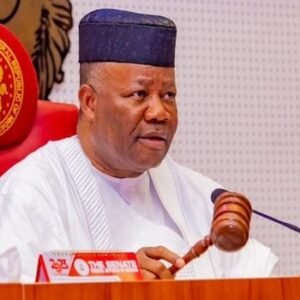
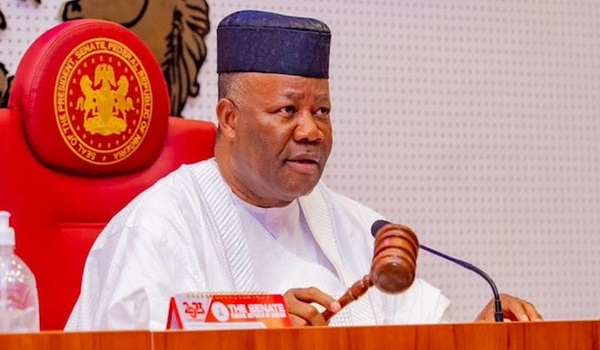
Godswill Akpabio presiding over Senate plenary as lawmakers announce defections in the National Assembly

Nigeria @66: Akpabio salutes resilience, calls for national unity

President of the Senate and Chairman of the National Assembly, Godswill Akpabio, has urged Nigerians to remain united and believe in the future of the country as Nigeria marks its 66th Independence Anniversary.   Akpabio, in a goodwill message issued through his Special Adviser on Media and Publicity, Eseme Eyiboh, congratulated President Bola Tinubu and Nigerians at home and abroad on the anniversary. According to the Senate President, Nigeria’s independence represents the hopes of freedom, self-government and the determination to shape the country’s destiny. He said the nation’s founding fathers and generations of Nigerians had made sacrifices that created the foundation for the country’s future. Akpabio acknowledged that Nigeria’s journey has included “triumphs and trials, seasons of confidence and moments of uncertainty”, but said Nigerians had continued to strive, create, serve and believe. “We celebrate that resilience today: the strength of a people whose hopes have survived every storm,” he said. He identified farmers, teachers, entrepreneurs and young Nigerians as among those contributing daily to the country’s development, while also highlighting Nigeria’s music, enterprise, hospitality and achievements around the world. The Senate President also called for greater unity, saying the country’s diversity across languages, cultures and faiths should remain part of its national identity. He paid tribute to members of the Armed Forces and security agencies who had lost their lives in service, while expressing gratitude to their families. Akpabio further assured Nigerians that the National Assembly would continue to support the Tinubu administration’s efforts to strengthen the country and improve the lives of citizens. He urged Nigerians to mark the anniversary with gratitude, friendship and renewed commitment to the country. “Independence is an inheritance renewed by every generation,” he said, urging citizens to keep faith with the possibilities before Nigeria. He concluded by wishing Nigerians a happy 66th Independence Anniversary and praying for the country’s leaders, homes and the Federal Republic of Nigeria.

Must Read

Tinubu directs delegation to Ethiopia to repatriate Nigerian prisoners held at Kaliti prison in Addis Ababa.

Tinubu rules out return to fuel subsidy, defends reforms

President Bola Tinubu has ruled out a return to Nigeria’s petrol subsidy regime, urging Nigerians to resist calls to reverse his administration’s economic reforms.   Tinubu made the declaration in his Independence Day address on Thursday, October 1, 2026, as Nigeria marked its 66th anniversary. The President defended the reforms introduced since he assumed office in 2023, saying they were designed to tackle longstanding weaknesses in the economy rather than merely ease their effects. “Our reforms did not create the weaknesses in our economy. They confronted them,” Tinubu said. ‘We must resist their siren song’ Tinubu acknowledged that the reforms had been difficult and that their “side effects were real”, but argued that abandoning them would amount to returning to policies that had failed to address the country’s underlying economic problems. He warned against calls from what he described as “certain influential but regressive voices” to abandon the reforms and return to subsidy arrangements. “Now, as certain influential but regressive voices would have us abandon the treatment and return ourselves to the abuse of addictive subsidies, we must resist their siren song,” he said. “We must remember why we began this journey and how far we have already come.” Using the analogy of a cancer patient undergoing painful but necessary treatment, Tinubu said previous governments had focused on easing economic symptoms while allowing underlying problems to worsen. “Nigeria was like a sick patient who receives the terrible news that he has cancer,” he said. “His doctor explains that the treatment will be difficult and painful, but that it offers a strong prospect of recovery. The patient has a choice. He can begin treatment, endure its discomfort and fight the disease. Or he can ask only for morphine, dull the pain and leave the cancer to spread.” “For too long, Nigeria’s leaders chose morphine while praying for a miracle that never came,” the President added. Tinubu cites economic gains Defending his administration’s record, Tinubu said Nigeria’s economic outlook had improved, citing economic growth of more than four per cent in 2026 and contributions from both the oil and non-oil sectors. He also said oil theft had declined, inflation had fallen substantially from its peak, foreign reserves had been rebuilt and the foreign exchange market had stabilised. According to the President, Nigeria recorded more than $6bn in non-oil export revenue in 2025, which he described as the highest in the country’s history. “These are not idle claims. International observers, journalists, NGOs and multilateral institutions can see the change,” Tinubu said. He added that the government was moving from economic correction towards greater emphasis on jobs, production and widespread prosperity.
Read more
Tinubu directs delegation to Ethiopia to repatriate Nigerian prisoners held at Kaliti prison in Addis Ababa.

Tinubu rules out return to fuel subsidy, defends reforms

President Bola Tinubu has ruled out a return to Nigeria’s petrol subsidy regime, urging Nigerians to resist calls to reverse his administration’s economic reforms.   Tinubu made the declaration in his Independence Day address on Thursday, October 1, 2026, as Nigeria marked its 66th anniversary. The President defended the reforms introduced since he assumed office in 2023, saying they were designed to tackle longstanding weaknesses in the economy rather than merely ease their effects. “Our reforms did not create the weaknesses in our economy. They confronted them,” Tinubu said. ‘We must resist their siren song’ Tinubu acknowledged that the reforms had been difficult and that their “side effects were real”, but argued that abandoning them would amount to returning to policies that had failed to address the country’s underlying economic problems. He warned against calls from what he described as “certain influential but regressive voices” to abandon the reforms and return to subsidy arrangements. “Now, as certain influential but regressive voices would have us abandon the treatment and return ourselves to the abuse of addictive subsidies, we must resist their siren song,” he said. “We must remember why we began this journey and how far we have already come.” Using the analogy of a cancer patient undergoing painful but necessary treatment, Tinubu said previous governments had focused on easing economic symptoms while allowing underlying problems to worsen. “Nigeria was like a sick patient who receives the terrible news that he has cancer,” he said. “His doctor explains that the treatment will be difficult and painful, but that it offers a strong prospect of recovery. The patient has a choice. He can begin treatment, endure its discomfort and fight the disease. Or he can ask only for morphine, dull the pain and leave the cancer to spread.” “For too long, Nigeria’s leaders chose morphine while praying for a miracle that never came,” the President added. Tinubu cites economic gains Defending his administration’s record, Tinubu said Nigeria’s economic outlook had improved, citing economic growth of more than four per cent in 2026 and contributions from both the oil and non-oil sectors. He also said oil theft had declined, inflation had fallen substantially from its peak, foreign reserves had been rebuilt and the foreign exchange market had stabilised. According to the President, Nigeria recorded more than $6bn in non-oil export revenue in 2025, which he described as the highest in the country’s history. “These are not idle claims. International observers, journalists, NGOs and multilateral institutions can see the change,” Tinubu said. He added that the government was moving from economic correction towards greater emphasis on jobs, production and widespread prosperity.
President Bola Ahmed Tinubu delivering the 2026 Democracy Day address, speaking on national reforms, security efforts, and democratic unity in Nigeria.

Nigeria @66: Tinubu declares reform era over, promises prosperity

President Bola Tinubu has declared that Nigeria’s most difficult phase of economic reforms is over, saying the country has moved from an “age of reform” into an “age of prosperity”.   Tinubu made the declaration on Thursday in his Independence Day address to mark Nigeria’s 66th anniversary, themed “From Reform to Prosperity.” The President defended his administration’s decision to remove petrol subsidies and reform the foreign exchange market, arguing that the measures were necessary to address long-standing economic weaknesses. He compared Nigeria’s economic situation before the reforms to a cancer patient who had to choose between painful treatment and temporary relief. “For too long, Nigeria’s leaders chose morphine while praying for a miracle that never came,” Tinubu said in the address. Tinubu warns against subsidy return The President also criticised calls for a return to petrol subsidies, urging Nigerians to reject what he described as a “siren song” to reverse the policy. “Now, as certain influential but regressive voices would have us abandon the treatment and return ourselves to the abuse of addictive subsidies, we must resist their siren song,” he said. Tinubu said his administration’s reforms did not create Nigeria’s economic weaknesses but confronted problems that had been left unresolved by previous governments. He said the reforms had helped produce stronger economic indicators, claiming that Nigeria’s economy had grown by more than four per cent in 2026, while inflation had fallen from its peak, foreign reserves had been rebuilt and the foreign exchange market had stabilised. He also said non-oil export revenue exceeded $6bn in 2025. PUNCH separately reported that the Federal Government cited real GDP growth of 4.2 per cent in the first half of 2026 as evidence of improving economic conditions. ‘Emergency treatment is over’ Tinubu said the government’s economic priorities had now shifted from stabilisation and reform to delivering broad-based prosperity. “The emergency treatment is over. The foundation has been repaired,” he said. According to the President, the next phase will focus on making prosperity visible in the daily lives of Nigerians through improved agricultural production, reliable electricity, easier access to credit, productive employment and more affordable food and transportation. He said the government would expand mechanised irrigation and dry-season farming, improve access to seeds and fertiliser, invest in storage and transport infrastructure, and strengthen links between farms, factories and markets. Tinubu promises jobs and industrial growth The President also placed jobs, enterprise and industrial expansion at the centre of the next phase of his administration. He said the government would use Nigeria’s gas resources to power industries, support the revival of factories, expand digital connectivity and invest in skills required by employers. “I want to see more Nigerians making things,” Tinubu said, adding that he wanted Nigerian businesses to produce for domestic consumption and export to international markets. The President also highlighted support programmes including the Nigerian Education Loan Fund and CREDICORP, saying they were intended to provide opportunities and financial support for Nigerians who could not wait for longer-term economic improvements. He said the government was also strengthening the National Social Register to improve support for vulnerable households. Cost of living remains a major issue Tinubu acknowledged that millions of Nigerians continue to struggle with food costs, school fees, healthcare expenses and transportation. He said the government’s approach would be to reduce the cost of producing and moving goods rather than relying solely on direct interventions. “When a farmer produces more cheaply, when fewer crops are lost between the farm and the market, when a manufacturer spends less on electricity, when a truck reaches its destination faster, and when the business environment fosters fair competition, all those savings will ultimately find their way into the price of goods in the market,” he said. However, economists, while acknowledging improvements in some macroeconomic indicators, said Nigeria still faced significant challenges involving poverty, unemployment, insecurity and weak productivity. Tinubu acknowledged that the government could not erase in four years problems that had accumulated over decades, but said his administration could change the country’s economic direction. “We will defeat” poverty, he said, while acknowledging that achieving the goal would require sustained economic growth and the creation of millions of productive opportunities. The President ended his Independence Day address by declaring that Nigeria had “corrected its course” and urged Nigerians to move forward without looking back. “The age of reform has done its work. Now begins the age of prosperity,” Tinubu said.


Editor's Pick

Trending News

Newsletter

Enter your email address and receive notifications of news by email.

You have been successfully Subscribed! Ops! Something went wrong, please try again.

© 2026 GongNews. All Rights Reserved.