
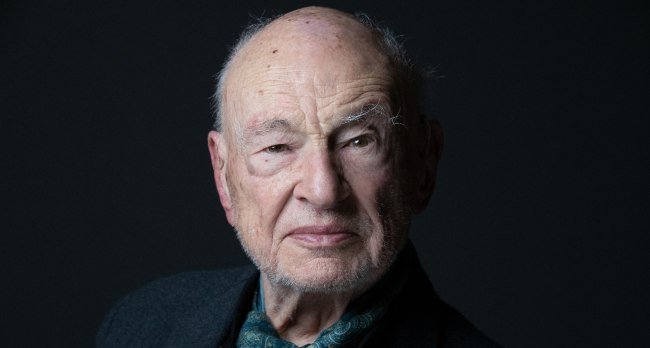
French philosopher and sociologist Edgar Morin has died at the age of 104, bringing to a close a remarkable life that spanned more than a century of intellectual, political and cultural change.
His wife, Sabah Abouessalam Morin, confirmed his death on Saturday, describing him as a thinker who remained deeply engaged with the world until his final days.
According to AFP, Morin was widely regarded as one of France’s most influential public intellectuals. A former member of the French Resistance during World War II, he devoted his life to promoting critical thinking, challenging dogma and exploring the complexities of human society.
Known affectionately by many as France’s intellectual “grandfather”, Morin developed a distinctive approach that combined philosophy, sociology, psychology, biology and anthropology. He often described himself as a “humanologist” rather than simply a sociologist.
Outside France, Morin gained international recognition for co-creating the concept of “cinema verite” alongside filmmaker Jean Rouch. Their 1961 documentary, Chronicle of a Summer, transformed documentary filmmaking through unscripted conversations with ordinary Parisians about happiness, race, class and colonialism.
Born Edgar Nahoum in Paris on July 8, 1921, to Jewish parents of Greek origin, Morin experienced personal tragedy at a young age when his mother died when he was 10. He later described the loss as his “personal Hiroshima”.
During World War II, he joined the French Resistance under the name Edgar Morin after initially supporting pacifist opposition to Nazi occupation. Following the war, he worked as a journalist, researcher and academic, eventually joining France’s national research institute, CNRS.
Morin’s relationship with the Communist Party ended after he was expelled for views deemed too independent. The experience reinforced his belief in self-criticism and intellectual freedom, themes he later explored in his book Autocritique.
Over subsequent decades, Morin became a leading voice on issues ranging from globalisation and environmental degradation to nationalism and social cohesion. Long before climate change became a dominant public concern, he warned about the dangers of unchecked economic growth and ecological decline.
His outspoken criticism of Israeli policies towards Palestinians also generated controversy. Although convicted of antisemitism over a 2002 article, France’s highest appeal court later cleared him, a case that sparked significant debate among academics and political commentators.
Even after turning 100, Morin remained active, publishing books and commenting on world events. In 2021, French President Emmanuel Macron honoured him during celebrations marking his centenary.
His final book was published in 2025, continuing a prolific literary career that produced dozens of works over several decades.
Announcing his death, Sabah Abouessalam Morin said his courage, moral rigour and hope would continue to inspire future generations.