
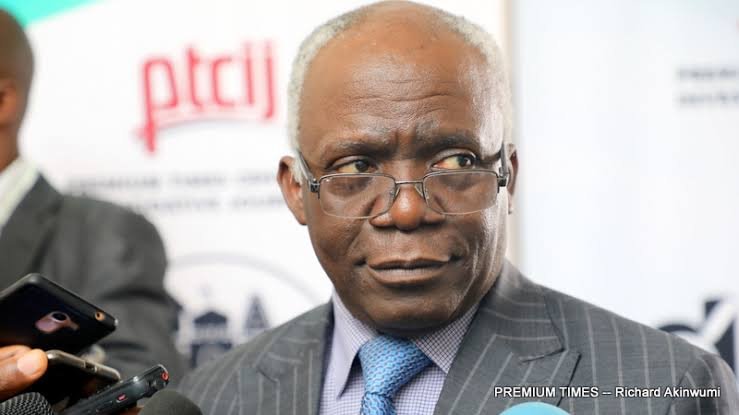
Human rights lawyer Femi Falana has warned that creating state police will not solve Nigeria’s security crisis unless the government also tackles poverty, unemployment and other social challenges.
Speaking on Politics Today on Channels Television on Thursday, Falana argued that discussions about insecurity have focused too heavily on policing structures while overlooking the root causes that drive many young people into crime.
“We always reduce the problem of insecurity to security architecture,” he said, stressing that increasing the number of police stations or recruiting more officers would not be enough without stronger social welfare programmes, job creation and support for vulnerable Nigerians.
His comments followed Bola Tinubu’s transmission of a constitutional amendment bill to the Senate seeking to establish state police services. The Senate has since passed the bill, paving the way for a dual policing system comprising a Federal Police Service and State Police Services, subject to further legislative processes and presidential assent.
Under the proposed legislation, state governors would appoint commissioners of police for their respective states, with confirmation by state Houses of Assembly. Lawmakers also included safeguards intended to protect political freedoms and civil liberties.
Falana noted that Nigeria operated a regional policing system during the First Republic but said it was abolished because of widespread abuse by regional political leaders. He argued that the country must first address the factors that led to its abolition before restoring such a system.
He also described the bill as “sketchy”, saying it did not sufficiently address concerns over accountability, checks and balances or the financial capacity of states to operate their own police forces.
According to Falana, several state governments already struggle to pay salaries and pensions, raising doubts about their ability to sustainably fund state police services.
The remarks come as debate continues over whether decentralised policing can improve security across Nigeria amid rising concerns over crime and violence.