

/ Aug 17, 2026
/ Aug 17, 2026

Labour Strike: NSA invites leaders for talks

Published on

By

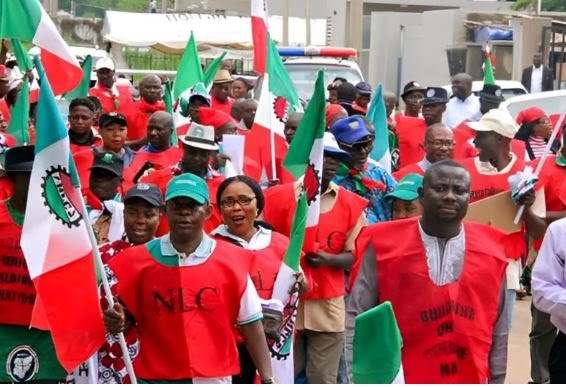
The National Security Adviser, Nuhu Ribadu, has summoned a meeting with the leadership of the Nigeria Labour Congress and the Trade Union Congress over the ongoing nationwide strike.

Though it is not clear whether the labour leaders will attend the meeting, the National President of the TUC, Festus Osifo during an interview with Arise Television on Tuesday noted that the labour leaders remain open to “reasonable and sincere” dialogue.

“A meeting has been summoned by the office of the NSA and it is slated for this afternoon,” a source familiar with the matter told  reporters Online.

Read Also:

OPS kicks against indefinite strike, Labour vows to shut down airports, others 

Ribadu had on Wednesday morning said some suspects had been arrested in connection with the attack on the President of NLC, Joe Ajaero.

The NSA, who expressed concern over the ongoing industrial action by said investigation had since commenced on the matter.

The ongoing strike is to protest the battering of Ajaero, and some other executives of the congress in Owerri, Imo State, on November 1, as well as the pending labour issues in Imo State.

Ajaero was arrested by the police ahead of a state-wide protest in Imo, as disclosed by the NLC’s Head of Information, Benson Upah.

Although the police denied arresting Ajaero, stating that he was merely taken into protective custody to prevent a mob attack, the Imo State Governor, Hope Uzodimma, accused the labour leader of meddling in the political affairs of the state.

The NLC and TUC later wrote their affiliates such as the Academic Staff Union of Universities, National Union of Electricity Employees, Nigeria Union of Teachers, Judiciary Staff Union of Nigeria and Academic Staff Union of Polytechnics among others ahead of the nationwide strike.
You May Like

Leave a Reply

Your email address will not be published. Required fields are marked *

Most Popular

Must Read

a patient during a cholera response as the European Union provides emergency funding to Nigeria and three African countries.

Nigeria gets €1.5m as EU releases €2.3m to tackle cholera outbreaks in Africa

The European Commission has allocated €2.3 million in emergency humanitarian funding to Nigeria, Cameroon, the Central African Republic and Chad to support efforts to contain ongoing cholera outbreaks.   The funding, announced on Monday, is aimed at strengthening outbreak response, improving access to safe water and sanitation, and supporting affected communities. According to the World Health Organization (WHO), more than 61,000 cholera cases were reported across the African Region in the first five months of 2026. Nigeria gets €1.5m Nigeria will receive the largest share of the funding, with €1.5 million earmarked for the country’s cholera response. The money will be used to increase the number of intervention teams, provide essential supplies including cholera kits, and strengthen water, sanitation and hygiene measures. The EU said the support will also cover the treatment of public water points and household water, while helping intensify epidemiological surveillance in hard-to-reach areas. It will further support case management, risk communication and community sensitisation. The development comes as several Nigerian states continue to respond to rising cholera cases. In Plateau State, authorities recently intensified containment measures after reporting 537 cases and 17 deaths. Other countries receive funding Cameroon will receive €100,000 to support outbreak containment and case management, including additional healthcare personnel, medicines, cholera treatment units and oral rehydration points in affected communities. The Central African Republic will receive €500,000 to scale up case management and vaccination, alongside water, sanitation and hygiene interventions. The funding will also strengthen surveillance, community engagement and safe burials. Chad will receive €200,000 to help break the chain of cholera transmission through improved access to water, sanitation and hygiene, as well as community support for surveillance and case management. The EU Commissioner for Preparedness and Crisis Management, Hadja Lahbib, said cholera remains a preventable and treatable disease but continues to threaten communities without access to safe water and healthcare. The funding, she said, would enable humanitarian partners to respond quickly, contain outbreaks and protect vulnerable communities. Cholera is caused by Vibrio cholerae bacteria and is commonly transmitted through contaminated food or water. Severe infections can cause rapid dehydration and shock.
Read more

Editor's Pick

Trending News

Newsletter

Enter your email address and receive notifications of news by email.

You have been successfully Subscribed! Ops! Something went wrong, please try again.

© 2026 GongNews. All Rights Reserved.