

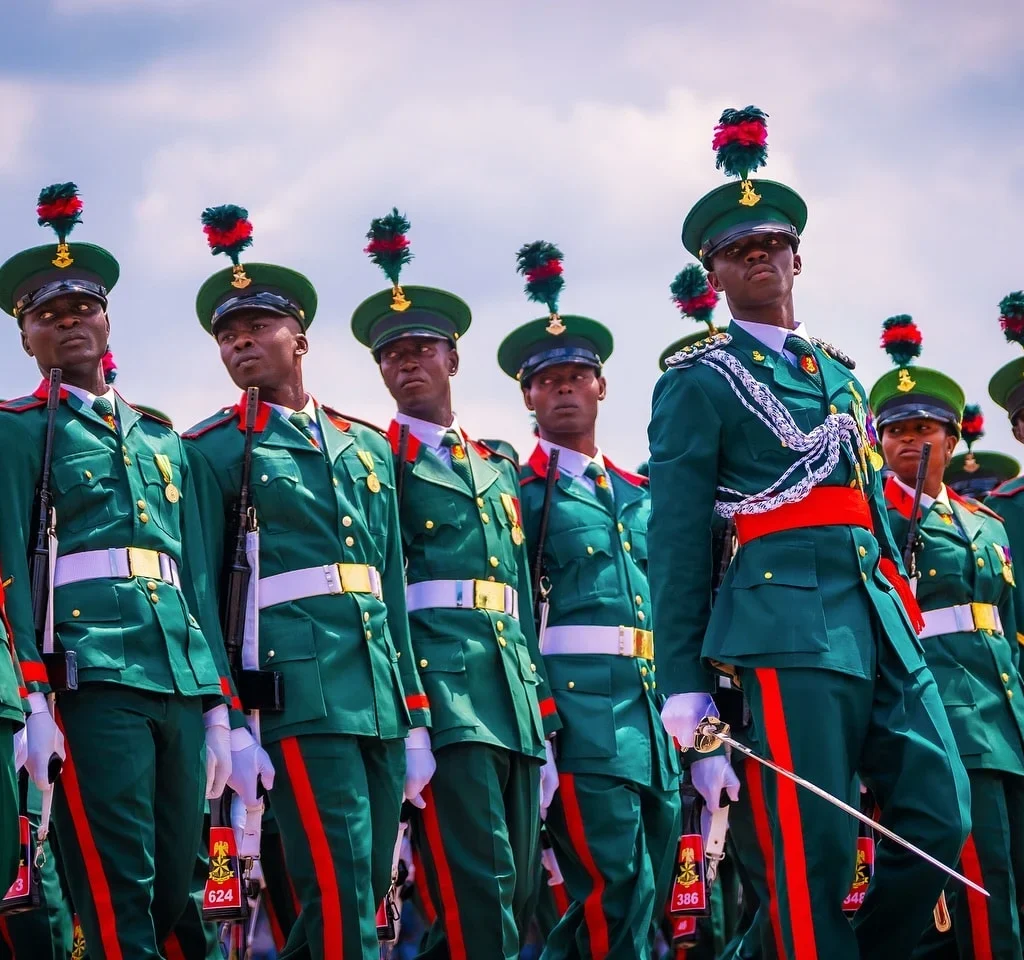
The Nigerian Army has announced the commencement of applications for the Direct Short Service Commission (DSSC) Course 29/2026, inviting qualified Nigerians to apply for commissioning as officers.
In a statement posted on its official X handle on Tuesday, the Army said the DSSC is open to both civilians and serving military personnel with relevant professional qualifications.
Successful candidates will be commissioned into specialised corps of the Nigerian Army to support national defence and security operations.
However, a survey of youth opinions conducted reveals deep divisions among young Nigerians over the offer, with many citing longstanding concerns about corruption, inadequate equipment, and poor welfare for serving, retired, and fallen personnel, issues that have, in some cases, led to protests by affected families.
Despite these concerns, some youths insist they are ready to serve regardless of the risks. Abubakar Haruna, 28, told that while the complaints raised by others deserve attention, they should not discourage patriotic service at a critical time for the country.
“If everyone says they won’t join the Army, who will protect the nation?” he asked. “We must be ready to defend our lives, our parents, and our country. We are prepared to do that.”
This view contrasts sharply with that of Faisal Muhammad, 30, a recent university graduate, who said he would only consider joining the military after meaningful reforms are implemented.
“The government must first address soldiers’ welfare and provide adequate equipment. How do you expect me to confront criminals whose weapons are more advanced than mine? We hear soldiers complain that bandits are better armed. In such a situation, I cannot have the confidence to enlist, and I doubt my parents would even allow it.” Faisal said
Similarly, Ibrahim Aminu, who has been unemployed for three years since graduating, said he would not join the military despite his desire to see an end to Nigeria’s security challenges.
“Even with the hardship of unemployment, I don’t see myself joining the Army,” he said.
“The government appears not to value the lives of security personnel, soldiers, police, and others alike. Retired junior officers often suffer neglect. Secondly, society does not always appreciate the sacrifices of soldiers; some even see them as oppressors or collaborators. That kills any motivation.”
These divergent views reflect a broader debate among Nigerian youths, while some argue that comprehensive reforms in soldiers’ welfare and recruitment processes must come first, others maintain that the current security crisis demands immediate sacrifice and service.
Reacting to the debate, a retired senior officer, Major Muhammad Bashir Shu’aibu Galma (Rtd.), MNI, said the differences in opinion are normal and not a cause for concern.
“Joining the Nigerian Army has never been compulsory,” he said.
“Even in our time, many of our peers had no interest in military service.”
According to him, those who join with genuine commitment rarely regret their decision. He also dismissed claims by some former officers on social media who express regrets over their years in service, warning that such narratives should not discourage willing applicants.
“Many senior officers today, soldiers, police officers, and paramilitary personnel, are children of former security personnel,” he noted.
However, Major Galma acknowledged flaws in the recruitment system, particularly political interference, which he said often allows unsuitable candidates into the military.
“I appeal to politicians to allow only qualified and willing individuals to be recruited,” he said.
“Many of those who are forced into the system end up deserting after training or becoming security liabilities, including aiding criminal elements.”
Some security analysts agree that the government still has time to restore confidence in military service among young Nigerians.
A security expert, Detective Auwal Durumin Iya, disclosed that Nigeria is already facing a shortage of soldiers, making fresh recruitment necessary.
“Inadequate manpower affects not just the military but also the police, who cannot effectively secure communities while insurgency persists in forests and border areas,” he said.
“No matter how sophisticated the equipment, you still need trained personnel to operate it. Policing is different from defending the nation against internal and external threats.”
He urged the government to prioritise welfare reforms across all security agencies.
“The government must improve welfare, ensure timely payment of salaries, provide adequate equipment, and care for the health and families of personnel,” he said.
“If officers are injured or killed, the state must stand by them. This is what will encourage young people to enlist.”
The debate comes amid worsening security conditions nationwide. Just last Sunday, at least nine Nigerian soldiers were reportedly killed and several others injured when their convoy hit a landmine and came under fire near Bindundul village, about 20 kilometres from Kareto in Borno State.
The incident has again been linked by experts to the military’s lack of advanced bomb-detection equipment commonly used by more developed countries.
As the February 4, 2026 deadline for DSSC applications approaches, attention now turns to how Nigerian youths will respond, whether calls for reform will outweigh the call to serve, or whether patriotism will prevail despite the risks.






Checked out ftrgame01 and I’m not disappointed. It has the perfect amount of thrill and excitement for me. Def one of the finest games out there ftrgame01
Magnificent beat ! I wish to apprentice whilst you amend your web site, how can i subscribe for a weblog website? The account helped me a acceptable deal. I were a little bit acquainted of this your broadcast offered bright clear concept
I have a question, can you contact me at anabella-miriam@m.spheremail.net ? Cheers!
excellent post.Ne’er knew this, thanks for letting me know.