
Organised private sector groups have cautioned against expecting businesses to automatically adopt a proposed ₦100,000 minimum wage, warning that many small and medium-sized enterprises (SMEs) are already struggling with rising operating costs and shrinking profit margins.
According to a report by Punch, business leaders said while some large corporations and thriving sectors may be able to pay above ₦100,000, many SMEs face significant challenges from inflation, energy costs, poor infrastructure and weak consumer demand.
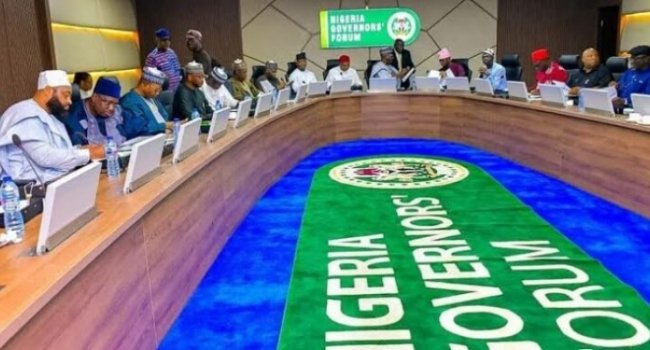
The debate follows recent discussions by the Nigeria Governors’ Forum over a possible new national minimum wage of ₦100,000, up from the current ₦70,000 benchmark introduced in 2024.
President of the Lagos Chamber of Commerce and Industry, Leye Kupoluyi, argued that private sector employers should not be compelled to match government wage levels if their businesses cannot sustain the cost.
Kupoluyi noted that many companies are burdened by high production costs and called on the government to address structural challenges such as fuel supply, poor road networks and support for strategic industries.
Similarly, Director-General of the Nigeria Employers’ Consultative Association, Adewale Oyerinde, said any nationally binding minimum wage must emerge through established tripartite negotiations involving government, labour and employers rather than political declarations.
The National Vice President of the National Association of Small-Scale Industrialists, Segun Kuti-George, described the proposed wage as desirable but unrealistic for many businesses already grappling with increased production costs and reduced profitability.
Also speaking, President of the Association of Small Business Owners of Nigeria, Femi Egbesola, said larger firms may be able to adjust wages to retain talent, but many SMEs lack the financial capacity to implement an immediate increase to ₦100,000.
Chief Executive Officer of the Centre for the Promotion of Private Enterprise, Muda Yusuf, noted that wage levels already vary widely across industries, with sectors such as finance, oil and gas, and information technology paying significantly above ₦100,000. However, he stressed that many smaller businesses are still struggling to comply with the existing ₦70,000 minimum wage.
The comments come amid growing national debate over workers‘ welfare. The Nigeria Labour Congress recently rejected the ₦100,000 proposal, arguing that it falls short of what workers need to cope with current economic realities.