

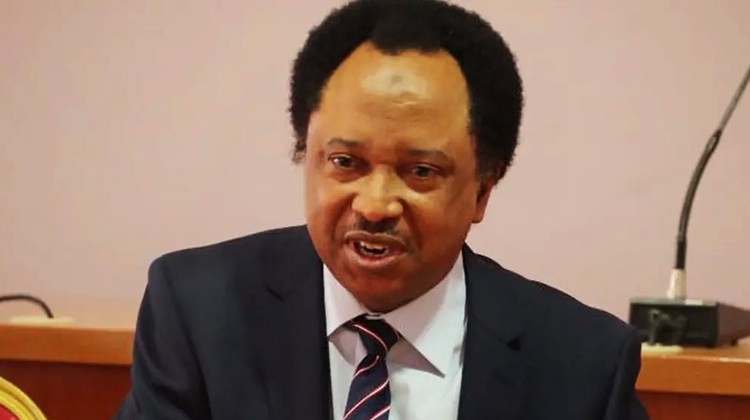
Former lawmaker and human rights activist, Senator Shehu Sani, has criticised the World Bank and International Monetary Fund (IMF), describing the Bretton Woods institutions as “the witches and wizards” behind Nigeria’s worsening economic hardship following government-implemented reforms.
In a post on his X (formerly Twitter) account on Friday, Sani said, “The World Bank and IMF are the Witches and Wizards who will tell you to remove subsidies and float your currency in the ocean and expect the miracle of wealth and prosperity, and when the results turn out to be poverty and misery, they blame you for taking the wrong dosage.”
Sani’s remarks come amid mounting public discontent over the excruciating hardship Nigerians have been plunged into by the economic reforms introduced by President Bola Tinubu’s administration in 2023, including the removal of fuel subsidies and the floating of the naira.
The policies have been praised by the World Bank and IMF as bold and necessary steps to stabilise Nigeria’s economy.
Following Tinubu’s inauguration in May 2023, both international financial institutions commended the Nigerian government for eliminating the decades-long fuel subsidy and unifying the country’s multiple exchange rates.
The IMF hailed the reforms as “crucial for restoring macroeconomic stability,” while the World Bank described them as “important measures to enhance fiscal transparency and attract foreign investment.”
However, the immediate aftermath of the policies has been marked by soaring inflation, a sharp depreciation of the naira, and a dramatic rise in living costs.
Fuel prices tripled within months, transportation and food costs spiked, and millions of households were plunged deeper into poverty.
In a reverse negative turn of events, a recent World Bank report released in September 2025 projected that by 2026, over 140 million Nigerians, roughly two-thirds of the country’s population, could be living in extreme poverty, driven by inflation, job losses, and weak social safety nets.
The report warned that Nigeria’s poverty rate would continue to rise unless the government implemented “targeted interventions” to cushion vulnerable groups from the impact of economic reforms.
Senator Sani has frequently criticised the influence of Western financial institutions on Nigeria’s economic policy.
His “witches and wizards” analogy underscores widespread frustration among Nigerians who feel the reforms, though lauded internationally, have deepened domestic suffering.
Sani’s post has since sparked widespread reactions online, with many Nigerians echoing his sentiments that the IMF and World Bank’s economic recommendations have failed to deliver tangible improvements for ordinary citizens.
Reacting to Sani’s remarks, an X user, @Adebanjosanya wrote, “The irony is that the same institutions prescribing “economic freedom” know it leads to dependency, not development.
“They hand you the poison, call it reform, and later write reports analyzing how you died.”
Also, @MarvellousIsra3, asked, “They will tell you to put your hand in the fire because you are foolish and lack sense, you will go and put your hand in the fire shey?
“Is there any advice they have been giving to Tinubu that they didn’t give to the predecessors before him?”
As Nigeria grapples with inflation and a weakening naira that recently crossed N1,500 to the dollar, debates continue over whether the nation’s economic strategy should follow international advice or pursue a more locally driven recovery path.

















h3nqfk
https://t.me/s/iGaming_live/4866
https://t.me/s/Martin_officials
В лабиринте игр, где каждый площадка пытается заманить заверениями легких призов, рейтинг онлайн казино
превращается именно той путеводителем, которая направляет через заросли подвохов. Игрокам хайроллеров да начинающих, которые пресытился с пустых заверений, такой помощник, чтобы почувствовать настоящую rtp, будто ощущение ценной ставки у ладони. Минус пустой болтовни, только проверенные клубы, где выигрыш не лишь показатель, но реальная фортуна.Подобрано из гугловых поисков, будто паутина, которая вылавливает наиболее актуальные веяния по интернете. В нём отсутствует пространства про стандартных приёмов, любой пункт как ход в покере, где обман выявляется мгновенно. Хайроллеры видят: в России тон речи с сарказмом, в котором сарказм маскируется словно совет, помогает обойти обмана.В https://www.youtube.com/@Don8Play/posts такой список лежит как раскрытая раздача, приготовленный для раздаче. Загляни, когда хочешь почувствовать биение подлинной азарта, без обмана плюс разочарований. Тем что ценит вес удачи, это как иметь фишки в пальцах, минуя глядеть по экран.