

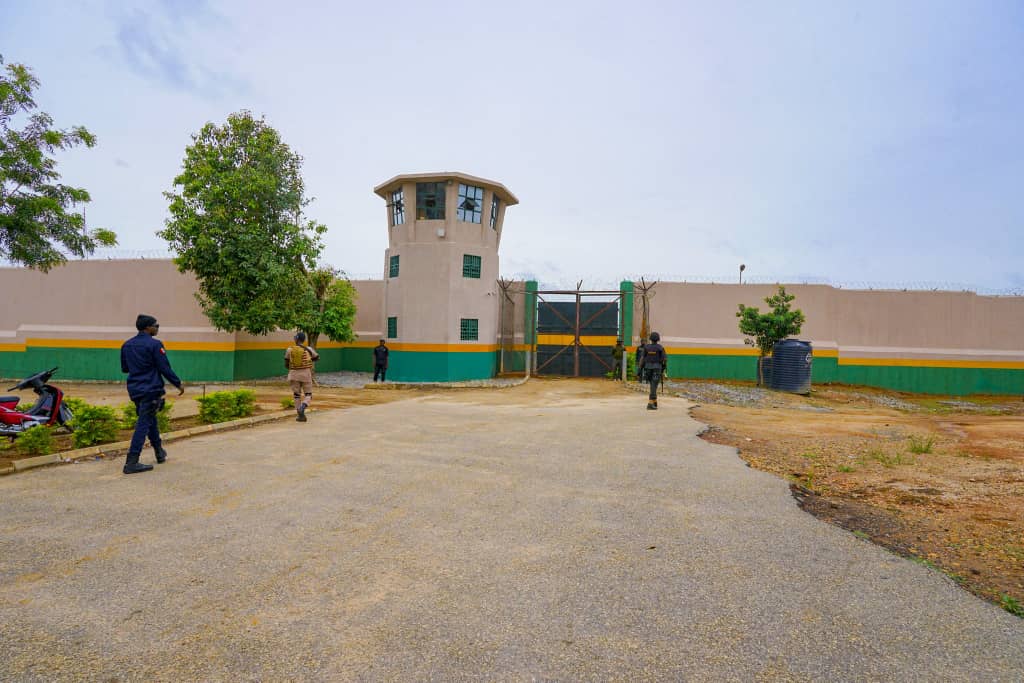
The Nigerian Correctional Service (NCOS), well known for its myriad of scourges, such as overcrowding, deteriorating infrastructure, and incessant prison breaks, is currently undergoing a remarkable transformation under the leadership of Interior Minister Olubunmi Tunji-Ojo.
Notably, one of his major reforms was taking on the pressing issue of overcrowding in the NCoS, which was exemplified by the presence of individuals incarcerated due to their inability to pay court-imposed fines.
The Minister has facilitated the release and rehabilitation of 4,068 inmates, and cleared their fines and compensations amounting to N585 million in partnership with national and international agencies.
This initiative not only decongested the facilities but also provided a second chance for victims of systemic injustices.
Furthermore, the minister established an Inmate Audit Committee for transparency and accountability, to verify the actual number of inmates and identify those eligible for release.
Collaborating with the Ministry of Justice on non-custodial services and the review of the Criminal Justice Act further underscores his commitment to a fair and just Correctional system.
Read Also:
Federal Gov’t Set to Relocate Overcrowded Keffi Prison After 200 Years
Infrastructure development has been another cornerstone of Tunji-Ojo’s reforms. The perimeter fencing of centers such as those in Kuje, Keffi New, and Jos has enhanced security, reducing the risk of prison breaks. During a recent inspection visit to centers in Abuja and Nasarawa State, the Minister noted the Federal Government’s heavy investment in perimeter fencing. By shifting from ordinary barbed wire to concrete fencing, maximum security for inmates is ensured, preventing a repeat of incidents like the last Suleja force majeure.
Likewise, ongoing efforts to renovate and build new facilities are crucial in addressing challenges posed by urbanization and aging infrastructure. For instance, the Suleja and Ikoyi centres were built over a century ago, and the Keffi Old centre is over two centuries old. These aging facilities are deteriorating, putting our most vulnerable at risk.
However, strategic plans are underway to relocate over 25 affected centers, addressing this pressing issue while complying with the Urbanization Law on Correctional Centres’ stipulating a 100-meter distance between a correctional centre and civilian buildings. This relocation will ensure a more secure and effective correctional system.
Under Tunj-ojo, The NCOS now ranks among the top 50 globally in terms of modernization and human rights compliance, according to the World Prison Brief: Nigeria Report.
The African Correctional Services Association considers the NCOS one of the most improved in Africa, with efforts focused on rehabilitation and reintegration. This demonstrates the wave of revolution happening in the Service.
In contrast to past administrations, it is evident that the current leadership has brought about more tangible improvements in a shorter span. Previous administrations struggled with these persistent challenges with minimal success in addressing them.
Overall, the gains of the Nigerian Correctional Service under President Tinubu’s administration marks a significant leap towards a modern, efficient, and humane Correctional system. The journey is ongoing, but the progress made so far highlights the Renewed Hope administration’s dedication to servicing the weakest as much as the strongest members of our society.
Written by Blessing Ele-ojo from Abuja


















https://t.me/kazino_s_minimalnym_depozitom/12