


Nigeria on Thursday, January 1, 2026, commenced the implementation of its much-anticipated new tax laws and fiscal reforms amid widespread public anxiety.
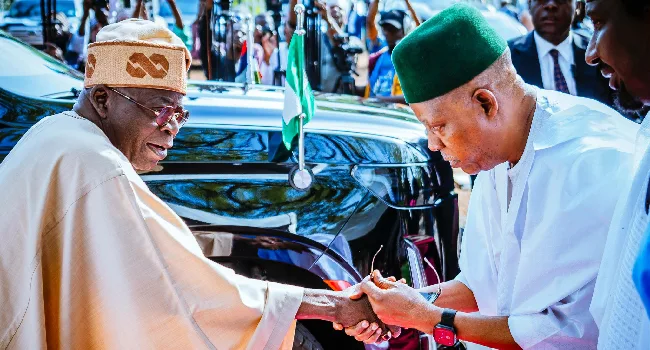
President Bola Ahmed Tinubu had on Tuesday reaffirmed that the new tax regime signed into law in June 2025 would take effect on January 1, despite repeated calls from various quarters for a suspension to allow for further review.
Among those who had urged the Federal Government to pause the implementation were the Nigeria Labour Congress (NLC), the Minority Caucus of the House of Representatives, former Senate Leader, Ali Ndume, human rights lawyer, Femi Falana (SAN), former Minister of Education Oby Ezekwesili, Bauchi State Governor, Bala Mohammed, and several opposition parties.
The controversy surrounding the tax reforms intensified after a lawmaker, Abdulsamman Dasuki, raised concerns over alleged alterations to the gazetted version of the tax law. Following the outcry, the leadership of the National Assembly ordered that the laws be re-gazetted to address the concerns.
Defending the reforms, President Tinubu assured Nigerians that the new tax laws would not impose additional burdens on citizens.
His position was echoed by Taiwo Oyedele, Chairman of the Presidential Fiscal Policy and Tax Reforms Committee, who maintained that the implementation was necessary to reposition the country’s revenue framework.
Further clearing the path for the rollout, Justice Bello Kawu of the Federal Capital Territory High Court dismissed a suit seeking to halt the implementation of the tax laws.
Despite these assurances, concerns over the possible effects of the reforms on individual incomes, prices, businesses, and corporate operations have continued to fuel public unease.
In a recent interview, a university don, economist, and accountant, Prof. Godwin Oyedokun, urged Nigerians to move beyond fear and misinformation, stressing that the reforms require “calm understanding rather than panic.
He explained that the objective of the new tax laws is not to punish taxpayers but to strengthen government revenue in a sustainable manner.
“The objective of the new tax laws is not to make life harder for Nigerians.
“It is to improve revenue efficiency, block leakages, and reduce the country’s dangerous dependence on oil income,” he said.
According to Oyedokun, Nigeria’s tax-to-GDP ratio remains among the lowest globally, limiting government capacity to fund infrastructure, healthcare, education, and security without excessive borrowing.
“What the government is trying to do is to broaden the tax base, not necessarily to raise tax rates across the board,” he noted.
Impact on Low-Income Earners
Addressing fears that the reforms could worsen hardship, Oyedokun said most low-income earners are unlikely to be directly affected.
“Personal income tax thresholds and exemptions are still in place to protect the most vulnerable Nigerians,” he explained.
“The greater responsibility is expected to fall on higher-income earners, large corporations, and sectors that have historically operated with weak compliance,” he added.
However, he cautioned that indirect effects could still emerge.
“There is a real risk that some businesses may pass compliance costs to consumers through higher prices, especially in an inflationary environment.
“But this depends largely on how the laws are enforced and how competitive the markets are,” he said.
What Businesses Should Expect
For businesses, the economist acknowledged that the reforms may initially feel demanding.
“Stronger reporting requirements and tighter enforcement will increase compliance costs in the short term,” he said.
“However, these measures are meant to ensure fairness so that companies that pay their taxes are not disadvantaged while others evade the system,” he noted.
He added that effective implementation could eventually benefit the private sector.
“A transparent and predictable tax system can support business growth through better infrastructure, improved public services, and reduced policy uncertainty,” Oyedokun said.
Call for Caution and Accountability
Oyedokun advised Nigerians to stay informed and actively engaged as the new laws take effect.
“Nigerians should approach these reforms with informed caution, not panic,” he said. “Public education, dialogue, and engagement with tax authorities are essential.”
He also stressed the responsibility of the government to deliver accountability.
“Taxes must translate into visible public value.
“Without service delivery and transparency, even the best-designed tax laws will face resistance,” he warned.
According to him, the success of the new tax regime will ultimately depend on trust, effective communication, and responsible governance.
“There may be short-term discomfort, but widespread harm is not inevitable.
“If implemented fairly and with sensitivity to current economic realities, these reforms can benefit Nigeria in the long run,” Oyedokun concluded.
















I just couldn’t go away your site before suggesting that I extremely enjoyed the standard info an individual supply for your visitors? Is gonna be again regularly to inspect new posts
Bet20plays – never heard of it, but I gave it a try. UI is good, easy to use. Games are okay, nothing groundbreaking though. Give it a whirl if you’re bored! Find it at: bet20plays
I will immediately clutch your rss feed as I can’t find your e-mail subscription hyperlink or newsletter service. Do you have any? Kindly permit me recognize so that I could subscribe. Thanks.
Incredible! This blog looks exactly like my old one! It’s on a entirely different topic but it has pretty much the same layout and design. Excellent choice of colors!
Hey there! Do you use Twitter? I’d like to follow you if that would be ok. I’m undoubtedly enjoying your blog and look forward to new updates.
Some truly prize blog posts on this internet site, saved to bookmarks.
Ahaa, its nice discussion about this piece of writing at this place at this web site, I have read all that, so now me also commenting at this place.
I’ll immediately snatch your rss feed as I can’t find your email subscription link or e-newsletter service. Do you have any? Please let me understand so that I could subscribe. Thanks.
Good site! I truly love how it is easy on my eyes and the data are well written. I’m wondering how I might be notified when a new post has been made. I have subscribed to your feed which must do the trick! Have a great day!
I’ll immediately grab your rss as I can’t to find your email subscription link or newsletter service. Do you have any? Kindly allow me know so that I could subscribe. Thanks.
Hi, yeah this piece of writing is in fact nice and I have learned lot of things from it about blogging. thanks.
Thanks in support of sharing such a pleasant opinion, post is pleasant, thats why i have read it completely
I am sure this piece of writing has touched all the internet people, its really really fastidious paragraph on building up new weblog.
I am sure this article has touched all the internet visitors, its really really good piece of writing on building up new web site.
Heya i am for the primary time here. I found this board and I to find It really helpful & it helped me out much. I am hoping to offer something again and aid others like you helped me.
I’ll immediately seize your rss as I can’t in finding your e-mail subscription link or newsletter service. Do you have any? Kindly allow me recognize in order that I could subscribe. Thanks.
Awsome website! I am loving it!! Will come back again. I am taking your feeds also
I will right away clutch your rss feed as I can not to find your e-mail subscription link or e-newsletter service. Do you have any? Kindly let me know so that I may just subscribe. Thanks.
I needed to thank you for this fantastic read!! I certainly enjoyed every little bit of it. I have you bookmarked to check out new stuff you post…
It’s very simple to find out any topic on net as compared to textbooks, as I found this post at this web page.
If some one wants to be updated with newest technologies after that he must be go to see this web page and be up to date all the time.
However, in case you nonetheless don’t consider us, you can at all times examine our roblox hack with any software you want.
You have made some good points there. I looked on the net to find out more about the issue and found most individuals will go along with your views on this web site.
I wanted to thank you for this great read!! I definitely loved every little bit of it. I’ve got you book marked to look at new stuff you
I wanted to thank you for this good read!! I definitely enjoyed every little bit of it. I have got you bookmarked to look at new stuff you