
/ Jul 05, 2026
/ Jul 05, 2026

Chinese tankers leave Strait of Hormuz with 4m barrels amid oil supply fears

Published on

By

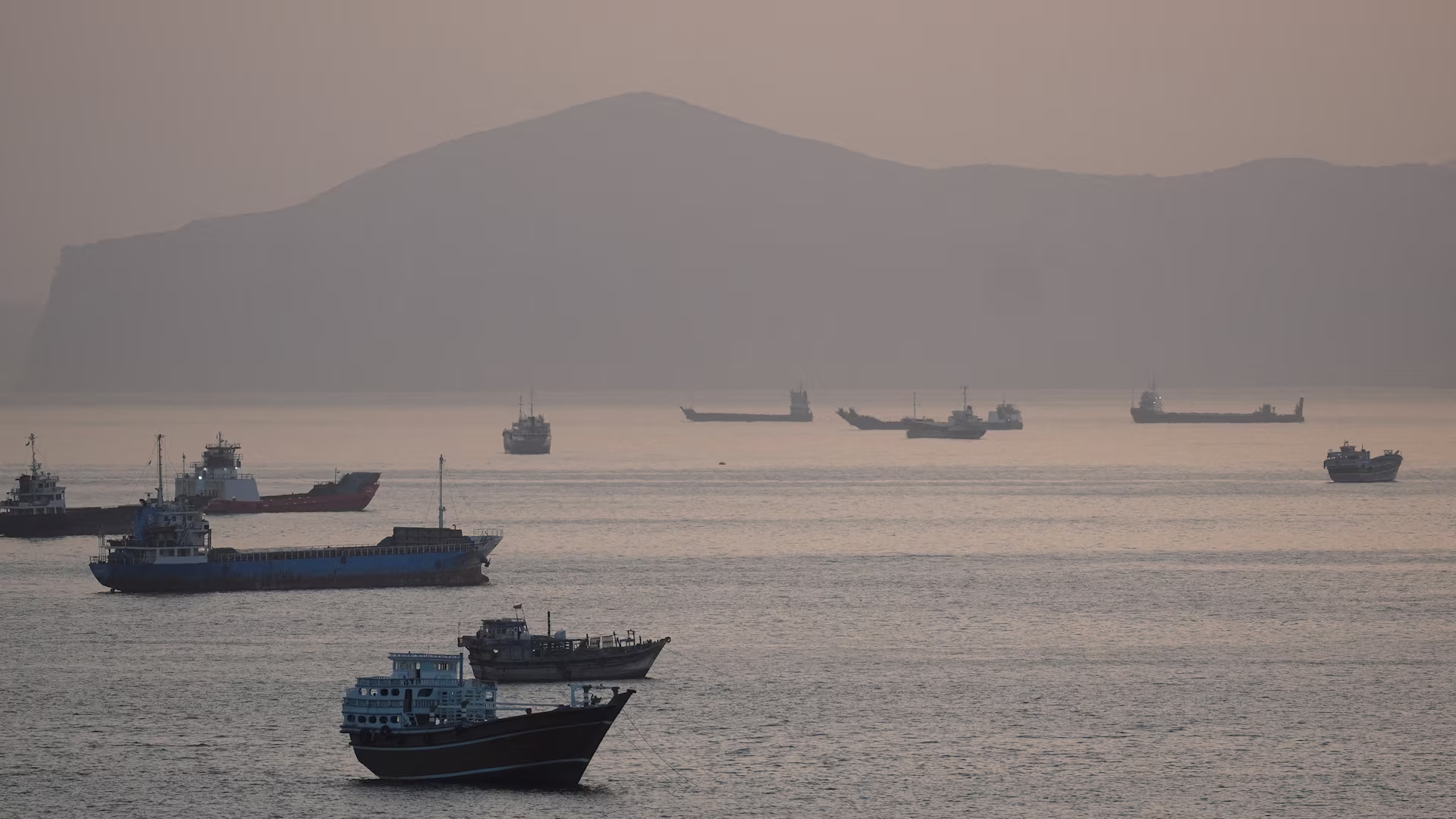
Two Chinese supertankers carrying about four million barrels of Middle East crude oil have exited the Strait of Hormuz after being delayed in the Gulf for more than two months, according to Reuters, citing shipping data from LSEG and Kpler.


The vessels, identified as the Chinese-flagged Yuan Gui Yang and Hong Kong-flagged Ocean Lily, are among a small number of tankers that have recently managed to leave the Gulf through a transit route reportedly ordered by Iran.

The Yuan Gui Yang loaded two million barrels of Iraqi Basrah crude on February 27, one day before the outbreak of the US-Israeli conflict involving Iran, Reuters reported. The tanker, chartered by Unipec, the trading arm of Sinopec, is expected to arrive at Shuidong Port in Guangdong province on June 4.

The Ocean Lily, owned by Chinese energy giant Sinochem loaded one million barrels each of Qatari al-Shaheen and Iraqi Basrah crude between late February and early March. It is expected to discharge its cargo at Quanzhou Port in Fujian province on June 5.

Reuters said another tanker, Yuan Hua Hu, had also exited the strait last week carrying two million barrels of Iraqi oil bound for eastern China.

The latest movements come amid continuing tensions around the Strait of Hormuz, a strategic shipping route that handles a major share of global oil exports. Tanker traffic through the passage has fallen sharply since the conflict began, with shipping companies facing risks linked to military activity, mines and drone threats.

Oil prices eased slightly following reports of the successful tanker crossings, raising cautious hopes that some crude exports may resume despite ongoing regional instability.


You May Like

Leave a Reply

Your email address will not be published. Required fields are marked *

Most Popular

Must Read

Femi Gbajabiamila amid controversy over the PFIPC fake agency scandal.

SGF office linked to PFIPC as fresh documents deepen fake agency scandal

Fresh documents have raised new questions over the Federal Government’s position on the controversial Presidential Foreign Investment Promotion Council (PFIPC), following revelations that the Office of the Secretary to the Government of the Federation processed official correspondence linked to the agency months before it was publicly declared fictitious.   According to an exclusive report by Punch Newspapers, official records show that the SGF’s office received and acted on a request for office accommodation submitted in the name of the PFIPC in November 2024. The request was reportedly submitted by the council’s self-styled Director-General, Adeniyi Adeyemi, who is currently facing criminal charges over allegations of forgery, impersonation and operating a non-existent government agency. Documents obtained by Saturday PUNCH showed that the request, dated November 7, 2024, was received by the SGF’s office on November 12 and later forwarded to the Economic and Financial Crimes Commission on November 21 for action. The correspondence, signed by Permanent Secretary of the General Services Office, Nnamdi Maurice Mbaeri, identified the PFIPC as one of three institutions seeking office accommodation from recovered Federal Government properties. In his request, Adeyemi described the PFIPC as a Federal Government investment promotion body tasked with attracting foreign direct investment, coordinating investment-related activities across ministries and positioning Nigeria as a preferred destination for investors. The latest development adds to ongoing controversy surrounding Adeyemi, who is accused of forging appointment documents allegedly bearing the signature of the Chief of Staff to President Bola Tinubu, Femi Gbajabiamila. The Federal Government has listed Gbajabiamila and 10 others as witnesses in the criminal case before the Federal High Court in Abuja. Prosecutors allege Adeyemi and two other suspects, currently at large, created and operated the PFIPC using forged presidential documents and official insignia to gain legitimacy. Investigators also alleged that Adeyemi operated 34 bank accounts, including accounts opened in the names of supposed government agencies, and held meetings with diplomats under the PFIPC banner. The Presidency has maintained that the PFIPC never legally existed. Presidential spokesman Bayo Onanuga recently described the agency as fictitious and defended the government’s position. However, the newly surfaced documents have intensified public scrutiny, with opposition parties, civil society groups and legal experts demanding an independent investigation into how the agency allegedly secured official recognition, staff approvals and budgetary allocations. Human rights lawyer Femi Falana has called for an independent probe into allegations surrounding both Adeyemi and officials linked to the matter, including claims involving accounts allegedly opened with the Central Bank of Nigeria. The Presidency has also vowed to investigate internal collaborators who may have enabled Adeyemi’s activities across government institutions. Presidential aide Temitope Ajayi said security agencies, including the EFCC, DSS and police, had been tasked with uncovering the full extent of the alleged network. The controversy continues to generate questions about oversight failures within government institutions and how the alleged scheme operated for months before being exposed.
Read more

Editor's Pick

Trending News

Newsletter

Enter your email address and receive notifications of news by email.

You have been successfully Subscribed! Ops! Something went wrong, please try again.

© 2026 GongNews. All Rights Reserved.