
/ May 21, 2026
/ May 21, 2026

NAFDAC ignores outcry, enforces sachet alcohol ban nationwide

Published on

By

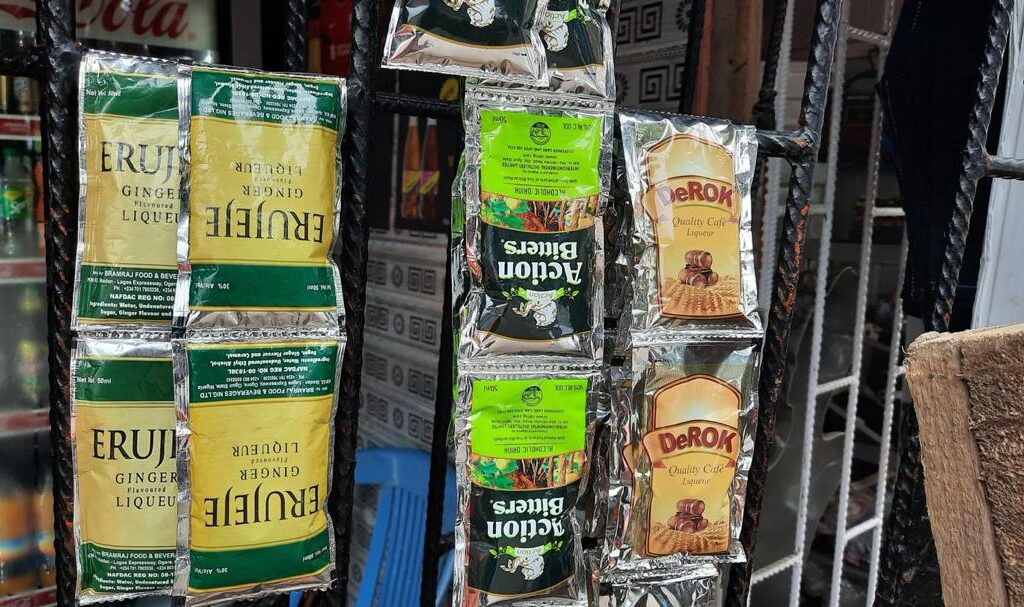
The National Agency for Food and Drug Administration and Control (NAFDAC) has resumed enforcement of the ban on the production and sale of alcoholic beverages packaged in sachets and small plastic or glass bottles below 200 milliliters, despite objections from industry stakeholders.

NAFDAC clarified that no alcohol-producing company was shut down, stressing that the enforcement targets only the sale of alcohol in sachets and small containers, which it says pose serious public health risks.

In a statement issued on Thursday, the Director-General of NAFDAC, Prof. Mojisola Christianah Adeyeye, said the action was aimed at protecting children, adolescents, and young adults from the harmful use of alcohol.

“The National Agency for Food and Drug Administration and Control has resumed enforcement of the ban on the production and sale of alcoholic beverages packaged in sachets and small-volume PET or glass bottles below 200 ml, in line with a resolution of the Senate of the Federal Republic of Nigeria and the agency’s public health mandate,” the statement read.

Adeyeye disclosed that reports from schools had revealed alarming trends, including a recent incident in which a teacher reported that a student claimed he could not sit for an examination without first consuming sachet alcohol.

She recalled that in December 2018, NAFDAC, in collaboration with the Federal Ministry of Health and Social Welfare and the Federal Competition and Consumer Protection Commission, signed a five-year Memorandum of Understanding with manufacturers to phase out sachet and small-volume alcohol packaging by January 31, 2024.

According to her, the moratorium was later extended to December 2025 to allow manufacturers to exhaust existing stock and adjust their production lines.

“The current Senate resolution aligns with the spirit and letter of that agreement and with Nigeria’s commitment to the World Health Assembly Global Strategy to Reduce the Harmful Use of Alcohol,” Adeyeye said.

She emphasized that the enforcement was not intended to punish manufacturers but to safeguard public health.

However, manufacturers and other stakeholders in the sector have continued to oppose the ban and its enforcement, citing concerns over its economic impact.


You May Like

Leave a Reply

Your email address will not be published. Required fields are marked *

Most Popular

Must Read

Minister of Education Tunji Alausa announces payment of outstanding BEA scholarship allowances to Nigerian students abroad.

FG begins N4bn payment of outstanding BEA scholars’ allowances

The federal government has commenced the payment of N4 billion in outstanding allowances owed to beneficiaries of the Bilateral Education Agreement, BEA, scholarship programme studying abroad.   According to TheCable, the ministry of education confirmed that the Central Bank of Nigeria has remitted the approved funds to Nigerian embassies and missions for immediate disbursement to eligible scholars. In a statement issued on Wednesday by Boriowo Folasade, director of press and public relations, the ministry said the payment represents 50 per cent of the approved outstanding obligations for 2025. Minister of Education, Tunji Alausa, said efforts are ongoing to clear the remaining balance. “The funds have already reached embassy accounts, and affected missions are expected to begin immediate payments to beneficiaries,” the statement said. The ministry advised affected students to monitor their accounts as payments begin to reflect. The federal government said the development reflects the commitment of President Bola Tinubu to the welfare and academic success of Nigerian students studying overseas. The BEA scholarship programme was established through agreements with countries including China, Russia, Algeria, Hungary, Morocco, Egypt and Serbia. Under the arrangement, host countries provide tuition and accommodation, while Nigeria pays allowances covering health insurance, medicals, books, transport and feeding. Last year, the federal government discontinued the programme for new applicants following allegations of fraud and concerns that the scheme had deviated from its original purpose. TheCable had earlier reported that delays in stipend payments left several Nigerian scholars stranded abroad, with some reportedly facing eviction and financial hardship. The ministry reiterated its commitment to meeting obligations to Nigerian scholars and sustaining policies aimed at improving education and human capital development.
Read more

Editor's Pick

Trending News

Newsletter

Enter your email address and receive notifications of news by email.

You have been successfully Subscribed! Ops! Something went wrong, please try again.

© 2026 GongNews. All Rights Reserved.