
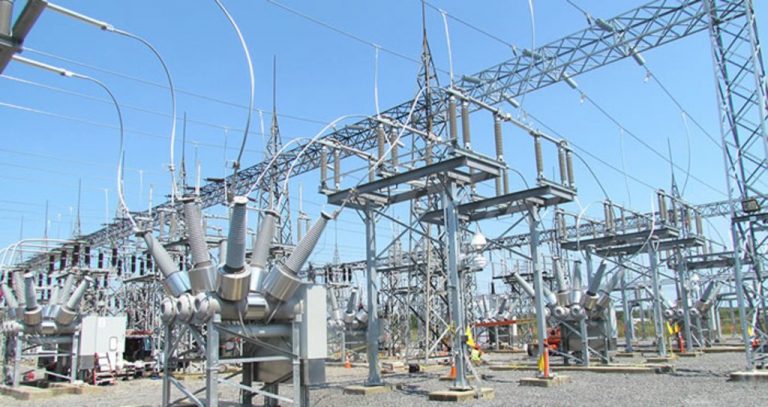
The Federal Government has cancelled $717.7m in undisbursed funding from the World Bank meant for Nigeria’s electricity sector, ending part of a $1.52bn power sector recovery programme amid worsening blackouts and mounting financial pressures.
According to a report by Punch Newspapers, documents obtained from the World Bank showed the cancellation followed a formal request by the Federal Government and a joint agreement to discontinue financing under the Power Sector Recovery Performance-Based Operation.
The World Bank said the cancelled amount represented the entire undisbursed balance under the programme, adding that no further disbursements would be made after approval of the restructuring.
The bank also brought forward the project’s closing date from June 30, 2027, to May 31, 2026, effectively ending the operation more than a year earlier than planned.
The original programme, approved in June 2020, was valued at about $752.5m and aimed to improve electricity supply reliability, strengthen the sector’s finances, and enhance accountability across the power value chain.
In June 2023, the World Bank approved an additional $763.5m financing package to deepen reforms and support new recovery efforts. However, the extra funding struggled to meet key reform conditions, leading to low disbursement levels and the eventual cancellation of the remaining balance.
The World Bank said Nigeria’s electricity sector still faces deep structural problems, including weak distribution performance, transmission bottlenecks, underutilised generation capacity, and persistent financial imbalances.
According to the report, high technical and commercial losses, combined with inadequate cost recovery, created a major gap between sector revenues and operating costs.
The bank noted that tariff shortfalls surged sharply after the liberalisation of Nigeria’s foreign exchange market in June 2023 triggered a steep depreciation of the naira, increasing the cost of natural gas used for power generation.
It explained that more than 70 per cent of electricity supplied to the national grid is generated using gas priced in US dollars.
Despite rising generation costs, electricity tariffs remained mostly unchanged for many consumers, except Band A customers whose tariffs were adjusted to cost-reflective levels in April 2024.
As a result, annual tariff shortfalls reportedly jumped from N140bn in 2022 to about N1.9tn in both 2024 and 2025, placing severe pressure on government finances.
The World Bank said Nigeria failed to achieve major reform indicators tied to the additional financing package because authorities could not establish a credible financing plan capable of reducing the growing deficits.
Implementation delays involving the Transmission Company of Nigeria and verification challenges also slowed progress and limited disbursements.
Financial data in the restructuring document showed that only about nine per cent of the additional financing package was disbursed.
Under the International Bank for Reconstruction and Development component, just $41.24m was released out of the committed $449m.
The World Bank described implementation progress under the additional financing as “Moderately Unsatisfactory” and concluded that the programme’s design no longer aligned with the realities of Nigeria’s electricity sector.
Meanwhile, the Accountant-General of the Federation, Shamseldeen Ogunjimi, recently warned that Nigeria could reject future World Bank loan facilities if approval and disbursement delays persist.
He said prolonged approval timelines could affect project execution and undermine development objectives.