/ Jul 03, 2026
/ Jul 03, 2026

News

  • All
  • Africa
  • Agriculture
  • Aviation
  • Banking
  • Business
  • Crime
  • Economy
  • Education
  • Entertainment
  • fashion
  • Health
  • Home
  • International
  • Judiciary
  • lifestyle
  • Metro
  • News
  • Nigeria
  • Politics
  • Religion
  • Security
  • Sport
  • sports
  • Tech
  • Technology
  • World News
EFCC declares ex-minister Timipre Sylva wanted

November 11, 2025

The Economic and Financial Crimes Commission (EFCC) has declared former Minister of State for Petroleum Resources and ex-Governor of Bayelsa State, Timipre Sylva, wanted for alleged involvement in financial crimes....

Trending

Tinubu surpasses Buhari with 1,062 national honours in three years

Tinubu warns media against giving voice to terrorists

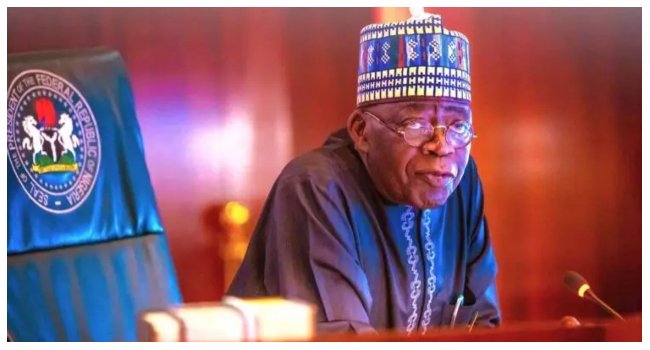
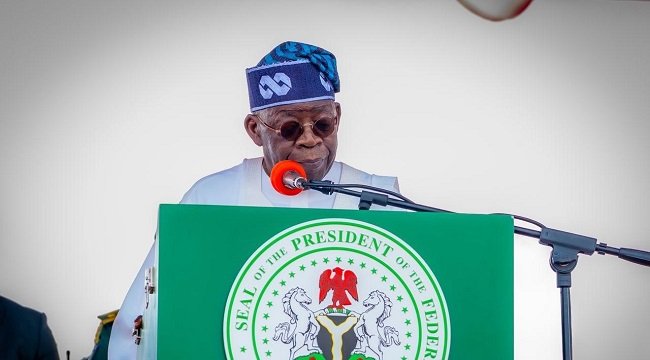
President Bola Ahmed Tinubu has urged Nigerian journalists to avoid becoming platforms for terrorists and kidnappers, stressing the need for responsible reporting amid the country’s security challenges.   Speaking at the inaugural Presidential Press Corps Dinner at the State House in Abuja, Tinubu warned that careless reporting could weaken national security and undermine democratic progress. According to Channels Television, the President said the media must prioritise national interest over sensationalism and avoid amplifying narratives pushed by criminal groups seeking to destabilise Nigeria. Tinubu said journalists and public officials share a responsibility to protect the country from division and fear. He emphasised that while press freedom remains essential to democracy, it must be exercised with responsibility, fairness, and accuracy. “The media must choose fact over falsehood, substance over sensation and credibility over clickbait,” Tinubu said. He also warned against misinformation, stating that freedom of expression does not include the right to defame or mislead the public. The President defended laws such as the Cybercrimes Act, saying they were designed to shield citizens from malicious falsehoods and digital abuse rather than suppress press freedom. On the economy, Tinubu maintained that his administration’s reforms were beginning to deliver results. He said public revenues were improving, foreign reserves had climbed above $50 billion, and investor confidence was returning. He also highlighted progress in security operations, noting that military offensives and improved intelligence had led to the neutralisation of thousands of terrorists and criminals, while hostages had been rescued and previously troubled communities recovered. Also present at the dinner were Oluremi Tinubu, George Akume, Femi Gbajabiamila, and several cabinet ministers. Information Minister Mohammed Idris also called on journalists to report security issues responsibly, urging the media to avoid headlines that could unintentionally strengthen terrorist propaganda. The event also honoured notable Nigerians for contributions to national development, including Nyesom Wike, Aliko Dangote, and Tony Elumelu.
World Bank headquarters as Nigeria seeks approval for a new $1.25bn loan to support economic reforms and job creation.

World Bank says Nigeria’s fiscal problem is revenue, not debt

The World Bank has said Nigeria’s biggest fiscal challenge is weak revenue generation rather than rising debt levels.   Speaking in an interview on Channels Television, Mathew Verghis, the World Bank’s country director for Nigeria, said the country’s debt burden remains moderate by international standards. According to Verghis, Nigeria’s core problem is low revenue mobilisation, which limits the government’s ability to fund development and repay obligations. “From our assessment, Nigeria doesn’t have a high indebtedness problem, it has a low revenue problem,” he said. He explained that Nigeria’s debt-to-economy ratio is lower than that of many comparable countries, stressing that the country should not be grouped with nations facing debt distress. Verghis cited Ghana as an example of a country dealing with debt restructuring, noting that Nigeria’s situation is significantly different. He said borrowing remains necessary for countries seeking to invest in long-term development projects, especially those that deliver future economic returns. According to him, governments often rely on debt financing to fund major infrastructure projects, improve public services and stimulate economic growth. Verghis pointed to the urgent need for improved energy access, noting that connecting millions of Nigerians to electricity would require substantial investment. He said providing energy access to about 32 million Nigerians would involve significant borrowing but would ultimately strengthen economic productivity and improve repayment capacity. The World Bank official warned that unless Nigeria significantly improves revenue collection, the country could struggle to meet future debt obligations despite its moderate debt profile. He added that stronger revenue generation would allow the government to invest more in infrastructure, healthcare, agriculture and digital connectivity while supporting job creation and poverty reduction. The comments follow the World Bank’s recent six-year country partnership framework for Nigeria, which places job creation at the centre of support through strategic investments in key sectors.
Nigerian Air Force C-130H aircraft airlifting troops for ECOWAS peacekeeping mission to The Gambia.

NAF deploys 198 troops to Gambia for ECOWAS peace mission

The Nigerian Air Force has confirmed the successful airlift of 198 Nigerian troops to The Gambia as part of Nigeria’s contribution to the ECOWAS Mission in The Gambia.   According to a report by Punch Newspapers, the deployment was carried out in May 2026 using a NAF C-130H aircraft in two sorties between May 26 and May 30. The operation involved personnel of Nigerian Company 11 (NIGCOY 11), who were deployed to assume operational duties under the regional peacekeeping mission. The exercise also facilitated the rotation of Nigerian Company 10, alongside the movement of operational equipment and troops’ personal belongings. In a statement released on Friday, the Air Force said the mission underscored its growing strategic airlift capability and readiness to support peacekeeping and regional security operations across West Africa. The service noted that the successful deployment reflected its ability to project responsive air power beyond Nigeria’s borders, enabling rapid force deployment in support of peace, security and stability within the ECOWAS sub-region. Speaking on the mission, the Chief of the Air Staff, Air Marshal Sunday Aneke, said air power remains vital in tackling evolving security challenges across the region. He said every successful airlift mission strengthens Nigeria’s ability to protect national interests, support regional stability and maintain a mission-ready force capable of decisive response when needed. The Air Force added that the deployment aligns with its broader vision of building a highly motivated, professional and mission-ready force that can deliver effective air power in synergy with ground forces. Nigeria has remained one of the largest contributors to the ECOWAS mission in The Gambia since the force was deployed in 2017 following the political crisis triggered after former Gambian President Yahya Jammeh refused to concede defeat in the 2016 election. The ECOWAS mission was established to support democratic transition, maintain security and assist with security sector reforms in The Gambia.
Delta State Governor Sheriff Oborevwori announces 13th-month salary approval and teacher recruitment plans for civil servants and public schools.

Delta approves 13th-month salary for workers

The Delta State Government has approved the institutionalisation of a 13th-month salary for civil servants and announced plans to recruit more teachers for public secondary schools, in a move aimed at improving workers’ welfare and strengthening education delivery.   The decision was reached during the State Executive Council meeting chaired by Sheriff Oborevwori and disclosed on Friday. According to PUNCH, the Commissioner for Works (Rural Roads) and Public Information, Charles Aniagwu, said the council approved a memo presented by the governor to make the 13th-month salary a permanent statutory benefit for workers in the state. Aniagwu explained that the approval clears the way for an executive bill to be sent to the Delta State House of Assembly for legislative backing. Once passed into law, the payment will become a legal entitlement for civil servants and will no longer depend on the discretion of future administrations. He said the move ensures workers continue to enjoy the benefit beyond the tenure of the current administration. The council also raised concerns over the shortage of teachers in public secondary schools, particularly in science-related subjects, and directed the Ministry of Secondary Education to prepare a memo detailing the number of teachers required. Aniagwu said the council had given approval in principle for the recruitment of additional teachers to address the manpower gap and improve the quality of education in public schools. Beyond education and workers’ welfare, the Executive Council approved the procurement and installation of equipment for the Technical College in Oghareki, located in Ethiope West Local Government Area. Plans are also in place to equip the Technical College in Irri after its completion. The government said the approvals reflect its commitment to revitalising technical education and equipping young people with practical skills for employment and entrepreneurship. The council also approved several matters relating to the health and transport sectors, including new transport routes across the state. In addition, the appointment of HRM Goodnews Goodman Agbi, Athuaro I, as the Ovie of Oyede Kingdom in Isoko North Local Government Area was approved. The Delta government said the decisions underscore its broader commitment to workers’ welfare, quality education, healthcare delivery and improved public service across the state.

Must Read

Tinubu surpasses Buhari with 1,062 national honours in three years

Tinubu warns media against giving voice to terrorists

President Bola Ahmed Tinubu has urged Nigerian journalists to avoid becoming platforms for terrorists and kidnappers, stressing the need for responsible reporting amid the country’s security challenges.   Speaking at the inaugural Presidential Press Corps Dinner at the State House in Abuja, Tinubu warned that careless reporting could weaken national security and undermine democratic progress. According to Channels Television, the President said the media must prioritise national interest over sensationalism and avoid amplifying narratives pushed by criminal groups seeking to destabilise Nigeria. Tinubu said journalists and public officials share a responsibility to protect the country from division and fear. He emphasised that while press freedom remains essential to democracy, it must be exercised with responsibility, fairness, and accuracy. “The media must choose fact over falsehood, substance over sensation and credibility over clickbait,” Tinubu said. He also warned against misinformation, stating that freedom of expression does not include the right to defame or mislead the public. The President defended laws such as the Cybercrimes Act, saying they were designed to shield citizens from malicious falsehoods and digital abuse rather than suppress press freedom. On the economy, Tinubu maintained that his administration’s reforms were beginning to deliver results. He said public revenues were improving, foreign reserves had climbed above $50 billion, and investor confidence was returning. He also highlighted progress in security operations, noting that military offensives and improved intelligence had led to the neutralisation of thousands of terrorists and criminals, while hostages had been rescued and previously troubled communities recovered. Also present at the dinner were Oluremi Tinubu, George Akume, Femi Gbajabiamila, and several cabinet ministers. Information Minister Mohammed Idris also called on journalists to report security issues responsibly, urging the media to avoid headlines that could unintentionally strengthen terrorist propaganda. The event also honoured notable Nigerians for contributions to national development, including Nyesom Wike, Aliko Dangote, and Tony Elumelu.
Read more
Tinubu surpasses Buhari with 1,062 national honours in three years

Tinubu warns media against giving voice to terrorists

President Bola Ahmed Tinubu has urged Nigerian journalists to avoid becoming platforms for terrorists and kidnappers, stressing the need for responsible reporting amid the country’s security challenges.   Speaking at the inaugural Presidential Press Corps Dinner at the State House in Abuja, Tinubu warned that careless reporting could weaken national security and undermine democratic progress. According to Channels Television, the President said the media must prioritise national interest over sensationalism and avoid amplifying narratives pushed by criminal groups seeking to destabilise Nigeria. Tinubu said journalists and public officials share a responsibility to protect the country from division and fear. He emphasised that while press freedom remains essential to democracy, it must be exercised with responsibility, fairness, and accuracy. “The media must choose fact over falsehood, substance over sensation and credibility over clickbait,” Tinubu said. He also warned against misinformation, stating that freedom of expression does not include the right to defame or mislead the public. The President defended laws such as the Cybercrimes Act, saying they were designed to shield citizens from malicious falsehoods and digital abuse rather than suppress press freedom. On the economy, Tinubu maintained that his administration’s reforms were beginning to deliver results. He said public revenues were improving, foreign reserves had climbed above $50 billion, and investor confidence was returning. He also highlighted progress in security operations, noting that military offensives and improved intelligence had led to the neutralisation of thousands of terrorists and criminals, while hostages had been rescued and previously troubled communities recovered. Also present at the dinner were Oluremi Tinubu, George Akume, Femi Gbajabiamila, and several cabinet ministers. Information Minister Mohammed Idris also called on journalists to report security issues responsibly, urging the media to avoid headlines that could unintentionally strengthen terrorist propaganda. The event also honoured notable Nigerians for contributions to national development, including Nyesom Wike, Aliko Dangote, and Tony Elumelu.
World Bank headquarters as Nigeria seeks approval for a new $1.25bn loan to support economic reforms and job creation.

World Bank says Nigeria’s fiscal problem is revenue, not debt

The World Bank has said Nigeria’s biggest fiscal challenge is weak revenue generation rather than rising debt levels.   Speaking in an interview on Channels Television, Mathew Verghis, the World Bank’s country director for Nigeria, said the country’s debt burden remains moderate by international standards. According to Verghis, Nigeria’s core problem is low revenue mobilisation, which limits the government’s ability to fund development and repay obligations. “From our assessment, Nigeria doesn’t have a high indebtedness problem, it has a low revenue problem,” he said. He explained that Nigeria’s debt-to-economy ratio is lower than that of many comparable countries, stressing that the country should not be grouped with nations facing debt distress. Verghis cited Ghana as an example of a country dealing with debt restructuring, noting that Nigeria’s situation is significantly different. He said borrowing remains necessary for countries seeking to invest in long-term development projects, especially those that deliver future economic returns. According to him, governments often rely on debt financing to fund major infrastructure projects, improve public services and stimulate economic growth. Verghis pointed to the urgent need for improved energy access, noting that connecting millions of Nigerians to electricity would require substantial investment. He said providing energy access to about 32 million Nigerians would involve significant borrowing but would ultimately strengthen economic productivity and improve repayment capacity. The World Bank official warned that unless Nigeria significantly improves revenue collection, the country could struggle to meet future debt obligations despite its moderate debt profile. He added that stronger revenue generation would allow the government to invest more in infrastructure, healthcare, agriculture and digital connectivity while supporting job creation and poverty reduction. The comments follow the World Bank’s recent six-year country partnership framework for Nigeria, which places job creation at the centre of support through strategic investments in key sectors.

Editor's Pick

Trending News

Newsletter

Enter your email address and receive notifications of news by email.

You have been successfully Subscribed! Ops! Something went wrong, please try again.

© 2026 GongNews. All Rights Reserved.