
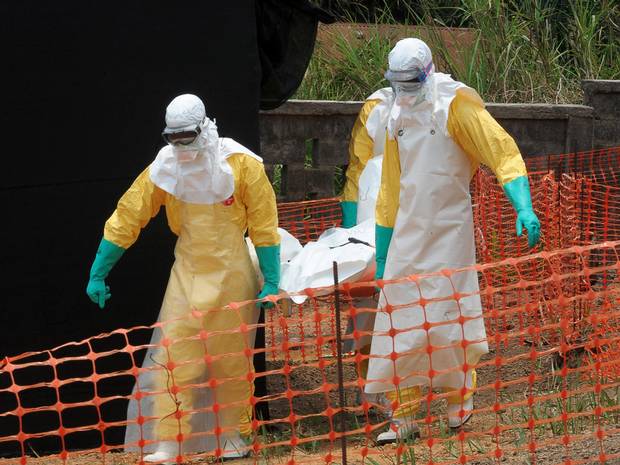
The death toll from the ongoing Ebola outbreak in the Democratic Republic of Congo has risen to 131, with authorities also recording 513 suspected cases across affected communities.
According to a report by TheCable, Congo’s health minister, Samuel Roger Kamba, disclosed the figures during an update on Monday on the spread of the Bundibugyo strain of the Ebola virus in Ituri province.
Kamba said not all the reported deaths had been confirmed as Ebola-related, noting that investigations were ongoing to establish the exact cause of death in several cases.
He revealed that six locations, including Mongbwalu and Rwampara, had been officially classified as outbreak zones. Bunia and Nyankunde in Ituri province, alongside Butembo-Katwa and Goma in North Kivu province, have also recorded infections.
The health minister blamed the delayed response on local misconceptions about the disease.
“The alert was delayed in the community because there was a belief that it was a mystical disease, and this caused the disease to spread,” he said.
In neighbouring Uganda, the Africa Centres for Disease Control and Prevention confirmed two Ebola cases and one death in Kampala, raising fears of wider regional transmission.
The Congolese ministry of health formally declared the outbreak on May 15, making it the country’s 17th Ebola outbreak since 1976.
Authorities said genomic sequencing identified the virus as the Bundibugyo variant, a strain different from those recorded in previous outbreaks in 2007 and 2012. Researchers at the National Institute of Biomedical Research said the strain originated from an animal reservoir.
Health officials also warned that there is currently no approved vaccine or targeted treatment for the Bundibugyo variant.
The World Health Organization recently declared the outbreak a Public Health Emergency of International Concern, while Africa CDC announced its first continental public health emergency for Ebola and pledged $2 million to support response efforts.
Meanwhile, the Nigeria Centre for Disease Control and Prevention said it is closely monitoring developments in both DR Congo and Uganda.