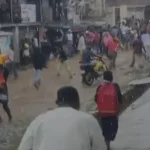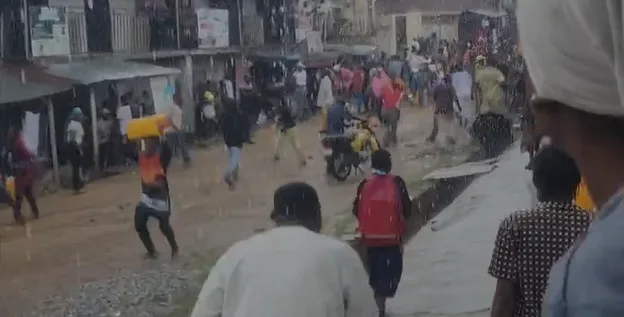
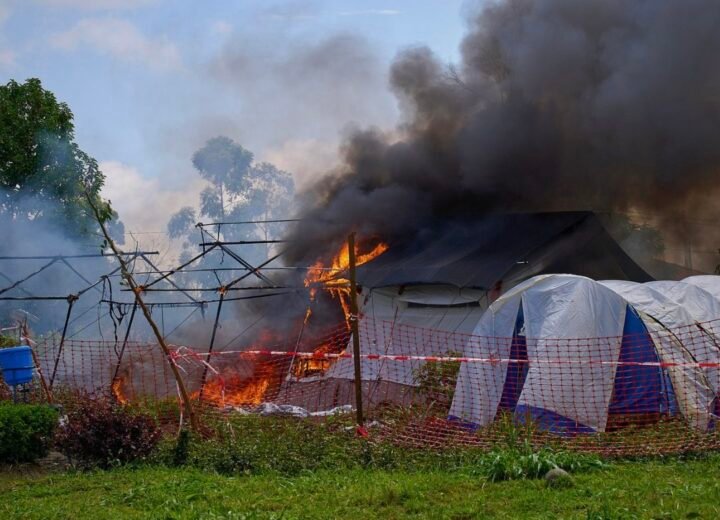
Residents in eastern Democratic Republic of the Congo have set fire to Ebola isolation tents after tensions erupted at a hospital over the handling of a victim’s body.
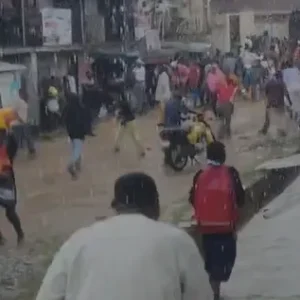
According to TheCable, the incident happened at Rwampara General Hospital near Bunia in Ituri province, the epicentre of the latest Ebola outbreak in the country.
Reports by the BBC said relatives and supporters of a young man believed to have died from Ebola attempted to remove his body for burial but were stopped by health officials.
The confrontation quickly escalated, forcing police to fire warning shots to disperse angry residents. Parts of the hospital’s Ebola isolation tents were subsequently torched during the unrest.
Health authorities insist that Ebola victims must undergo controlled burials because corpses remain highly infectious and can spread the deadly virus further.
Following the violence, medical workers at the hospital were placed under military protection as security forces moved to restore order in the area.
Jean Claude Mukendi, coordinator of the Ebola security response in Ituri, said many residents were struggling to accept the reality of the disease. He noted that the deceased, reportedly a local footballer, was widely known in the community.
The victim’s mother reportedly rejected claims that her son died of Ebola, insisting instead that he succumbed to typhoid fever.
Luc Malembe Malembe, a local politician, blamed misinformation and distrust for the violent reaction.
“People are not properly informed or sensitised about what is happening. For a certain segment of the population, especially in remote areas, Ebola is an invention by outsiders,” he was quoted as saying by the BBC.
He added that two isolation tents were destroyed in the blaze, including one containing a body awaiting burial.
World Health Organization Director-General Tedros Adhanom Ghebreyesus said the organisation has upgraded the Ebola outbreak risk in DR Congo to “very high” nationally.
Tedros disclosed that about 750 suspected Ebola cases and 177 suspected deaths had been recorded in the country.
The WHO continues to recommend “safe and dignified burials” conducted by specially trained teams using protective equipment to reduce transmission risks.